Tankless Water Heater Installation and Repair
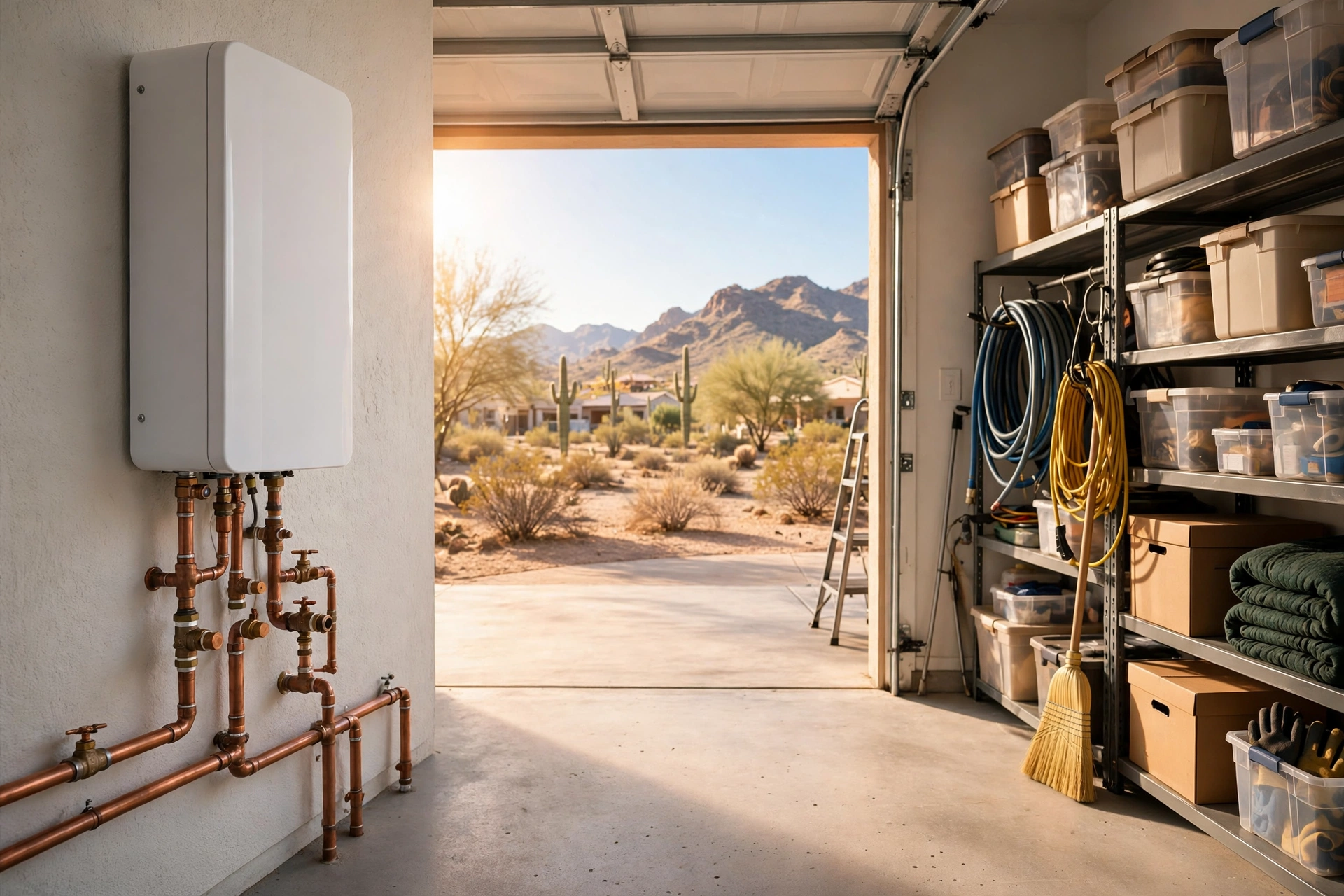
Tankless water heaters heat water only when a tap opens, which suits many Peoria homes where garage space is t...
Learn moreA gas water heater is a straightforward machine with a few parts that must work in sequence, and when one step in that sequence falters the whole household feels it. The pilot or igniter lights the burner, the burner heats the tank, the thermostat watches the temperature, and the venting carries exhaust outside. In Peoria, that sequence runs in a garage that climbs past 110 degrees in summer, fed by water that commonly measures 15 to 25 grains per gallon in hardness, and exposed to monsoon dust that creeps into every open vent and burner opening. Desert Valley Water Heater Pros connects homeowners with independent contractors in our network who repair gas units across Peoria and the West Valley, from older homes near Grand Avenue to newer builds off Loop 101.
Gas repairs reward careful diagnosis and punish guessing. A pilot that will not stay lit can mean a tired thermocouple, a dirty pilot assembly, a venting problem, or a gas supply issue, and each cause needs a different fix. A burner that roars, sputters, or burns unevenly tells its own story to a contractor who knows what to look for. This page explains the common faults, the safety steps that always come first, and how to tell a repair from a unit that has reached the end of its useful life. Homeowners who understand the sequence can describe symptoms clearly, and clear descriptions lead to faster, more accurate repairs.
Desert conditions attack gas water heaters from several directions at once. Hard water bakes sediment onto the tank bottom, which insulates the water from the burner and forces longer heating cycles. Those longer cycles overheat the tank bottom, stress the thermostat, and wear the gas control. Meanwhile summer garage heat bakes wiring, seals, and control components, and fine monsoon dust settles into burner ports and pilot assemblies. A unit that might last comfortably in softer water country works harder here, and its weak points show sooner.
The failure pattern is rarely sudden. First the recovery slows a little, then the rumbling starts, then the pilot needs relighting more often, then hot water runs short on busy mornings. Each step is easy to excuse on its own, but together they describe a unit under strain. Regular water heater maintenance interrupts that pattern by removing sediment and catching tired components before they fail outright. Contractors in our network look for the full pattern during a repair visit, not just the single fault that prompted the request.
Describe the symptoms and request service anywhere in Peoria and the West Valley.
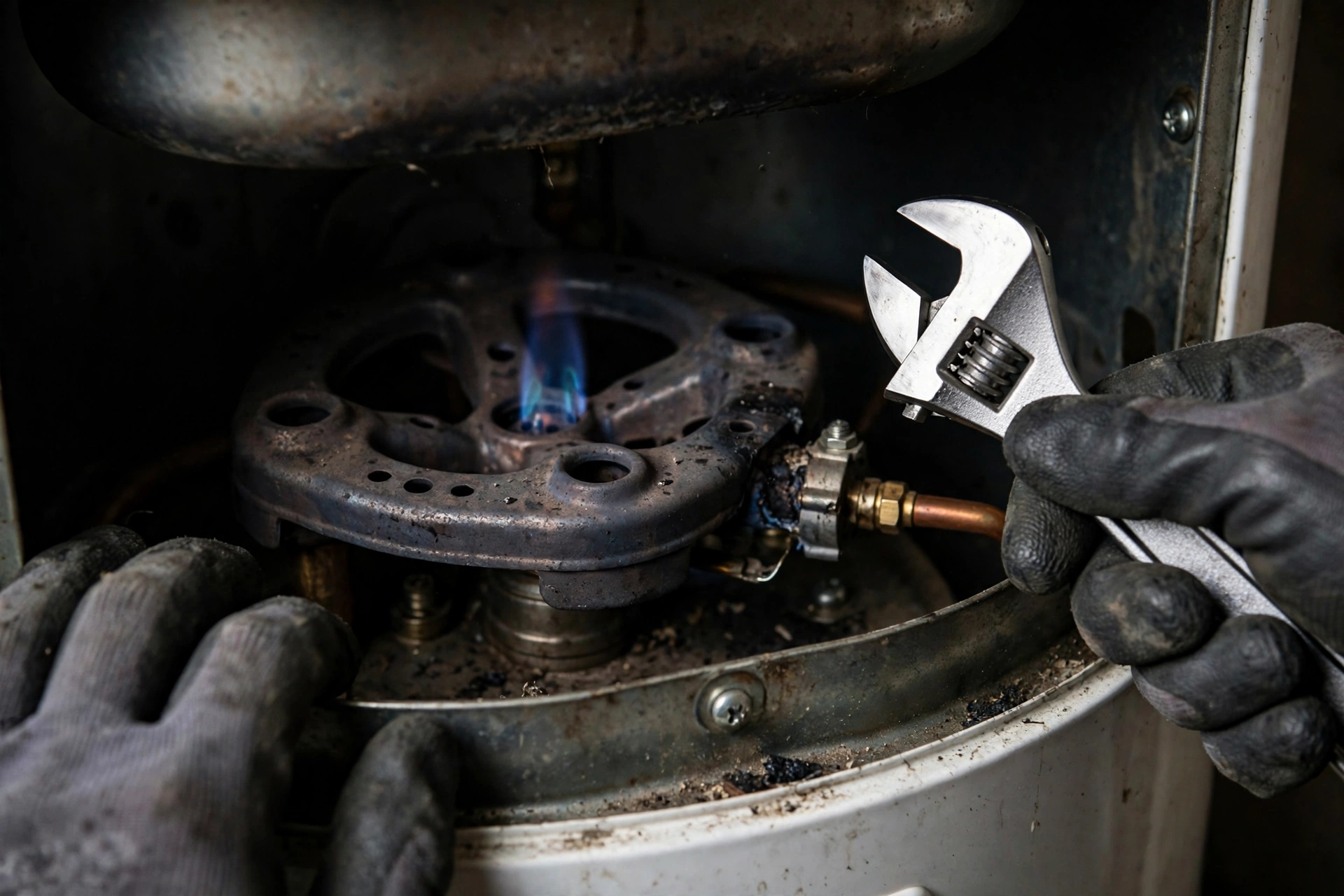
Pilot and igniter trouble is the most common reason Peoria homeowners request gas water heater repair. On pilot models, a thermocouple that no longer senses the pilot flame will shut off gas flow as a protective step, which leaves the homeowner relighting the pilot again and again. Dust and debris in the pilot assembly can weaken the flame until it cannot hold steady. On electronic ignition models, a worn igniter or a faulty flame sensor produces the same result through a different path: the unit tries to light, fails to confirm a flame, and shuts down.
Burner trouble shows up differently. A healthy burner burns with a steady, even flame. A burner with clogged ports burns unevenly, lifts off the burner surface, or produces a yellow, lazy flame with soot marks nearby. Contractors clean burner assemblies, check gas supply adequacy, and look at venting before condemning a part, because burner symptoms can come from air supply and exhaust problems as well as from the burner itself. Describing the flame appearance and any new noises helps the contractor narrow the cause before arriving.
Tell us what your unit is doing and request service.
The thermostat and gas control sit at the center of a gas water heater, sensing tank temperature and directing gas flow to the burner. When the sensing element drifts or the control sticks, the symptoms confuse homeowners: water that scalds one day and runs lukewarm the next, a burner that cycles too often, or a burner that never fires even though the pilot burns steadily. Contractors test temperature behavior at taps and observe burner cycling over a full heating period rather than replacing parts on a hunch.
Thermostat trouble sometimes masks sediment trouble, and the two often arrive together. A thick sediment layer makes the bottom of the tank overheat while the water above stays cooler, which confuses temperature sensing and drives erratic cycling. Flushing the tank and checking the anode rod belong in the same visit as thermostat testing, because fixing the control while ignoring the sediment leaves the root cause in place. The commonly recommended setting of 120 degrees gives the contractor a stable reference point for testing.
Request service and get a straight answer about your unit.
Rumbling and popping from a gas tank are the sound of steam forcing through sediment. The burner heats the tank bottom, water trapped under the sediment layer flashes to steam, and the steam bubbles collapse with a thump that carries through the garage wall. Homeowners near Bell Road and Arrowhead Towne Center report this sound often, and it almost always means the tank needs flushing. Left alone, the sediment layer grows, recovery slows, and hot water runs out earlier each morning as usable tank volume shrinks.
Shortages also come from a dip tube that has cracked or broken, which sends incoming cold water toward the top of the tank where it mixes with hot water headed for the taps. That fault produces lukewarm water even though the burner works correctly, and it fools homeowners into thinking the thermostat has failed. A contractor distinguishes sediment, dip tube, and thermostat causes by checking water temperature behavior, flushing results, and component condition together. The post on water softeners and anode rods in Peoria explains how mineral management and tank protection work together.
Do not wait for a small fault to flood the garage. Request service now.
Safety steps come before every gas repair, and homeowners should know them too. If you smell gas near the unit, leave the area, avoid using switches or appliances, and contact your gas provider and emergency services from outside the home. Do not relight a pilot or reset a unit when a gas smell is present. Contractors begin every gas visit by confirming the area is safe, checking for leaks at connections with proper methods, and verifying that venting carries exhaust outside. Those steps are never skipped to save time.
Carbon monoxide awareness belongs in every gas water heater conversation. A venting blockage, a disconnected vent section, or a burner starved of air can allow exhaust to spill into the garage instead of rising outside. Warning signs include soot marks around the draft hood, a vent pipe that feels loose, and a burner flame that looks wrong. Homes should have working carbon monoxide alarms placed according to the alarm maker guidance, and any suspected venting trouble should prompt a prompt request for service through the contact page.
Request service and talk through sizing, fuel type, and placement.
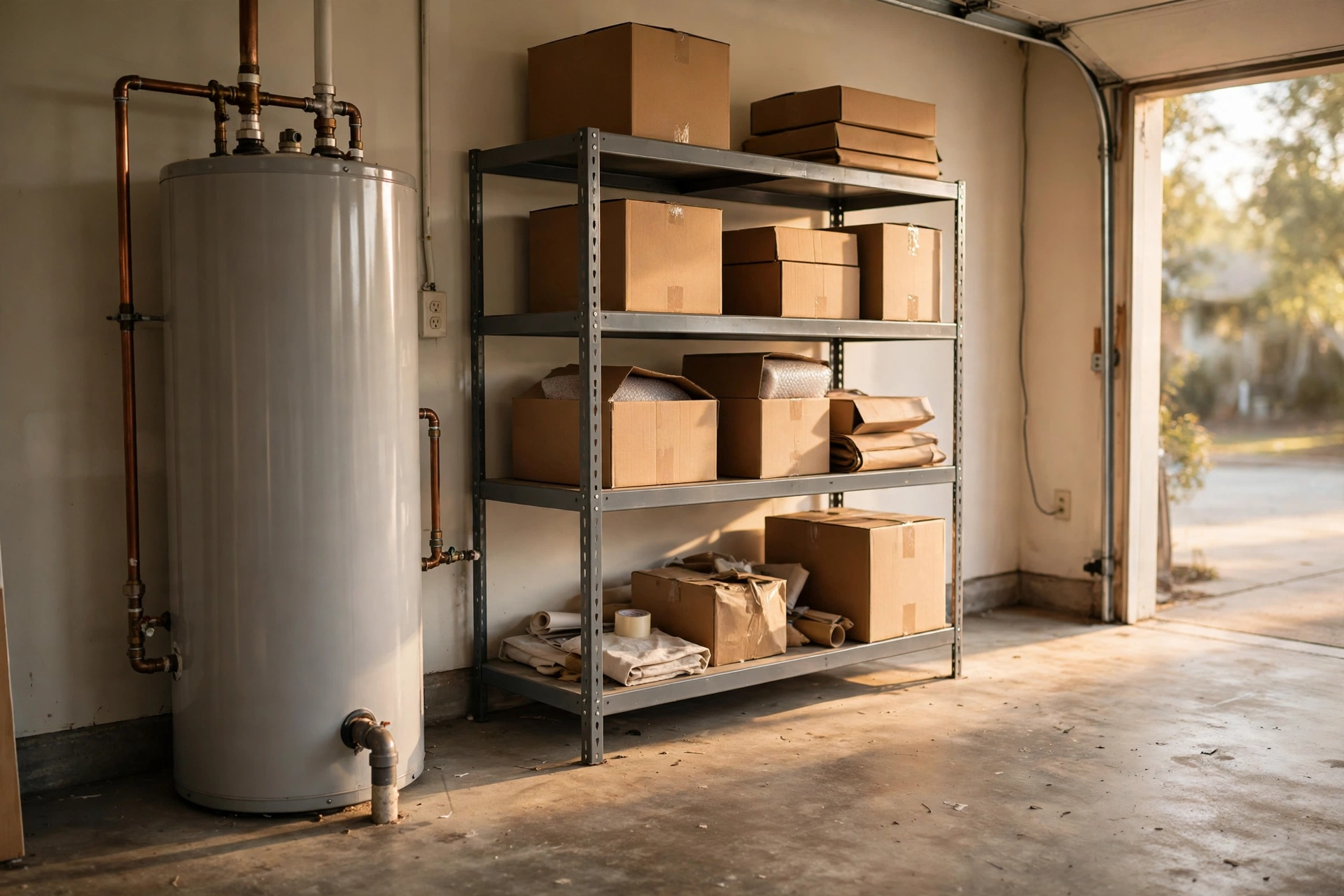
Not every gas fault justifies a repair, and honest contractors say so plainly. A mid life tank with a single failed thermocouple or igniter is a clear repair. An aging tank past 6 to 10 years with rusty water, a leaking tank body, and repeated control trouble is a replacement conversation, because each repair addresses one symptom while the tank itself declines. The contractor weighs age, tank condition, repair history, and household needs together, then explains the reasoning so the homeowner can decide with full information.
Households in El Mirage and Youngtown face the same decision pattern, and the same honest weighing applies across the West Valley. When replacement is the better path, the conversation turns to sizing, tank versus tankless options, and timing that avoids a surprise leak. The page on water heater replacement explains how that process works. When repair is the better path, the contractor completes the fix, tests a full heating cycle, and notes what to watch for next.
Related: request gas water heater repair, leaks on gas units, hard water and scale buildup
Request service and describe what your water heater is doing.
Describe what your unit is doing and we will help arrange the next step.
A pilot that will not stay lit often means a tired thermocouple, a dirty pilot assembly, or a venting or gas supply problem. The thermocouple senses the pilot flame and allows gas flow, so when it weakens the gas shuts off as a protective step. A contractor cleans and tests the pilot assembly and checks venting before replacing parts.
Rumbling usually means steam is forcing through a sediment layer on the tank bottom. Peoria hard water builds sediment quickly, and the burner overheats the layer until water trapped beneath it flashes to steam. Flushing the tank removes the sediment, and the contractor checks the anode rod during the same visit.
Sediment buildup, a broken dip tube, and thermostat trouble can all shorten hot water supply. Sediment reduces usable volume and slows recovery, while a broken dip tube mixes cold water into the hot supply. A contractor checks temperature behavior and flushes the tank to separate these causes.
Yes, a burner flame that looks yellow and lazy, with soot marks nearby, needs attention. It can mean clogged burner ports, air supply trouble, or venting problems. A contractor inspects the burner, checks airflow and venting, and cleans the assembly before deciding whether any part needs replacement.
Leave the area, avoid using switches or appliances, and contact your gas provider and emergency services from outside the home. Do not relight a pilot or reset the unit while a gas smell is present. Once the area is safe, request service so a contractor can check connections and controls.
Tank water heaters in Arizona usually last 6 to 10 years. Hard water, garage heat, and sediment all affect that span, and steady flushing and anode rod checks help a tank reach the longer end of the range. A contractor can confirm age from the maker label and assess tank condition during a repair visit.
Not seeing your question? Request service and describe what your unit is doing.
Request ServiceTankless water heaters heat water only when a tap opens, which suits many Peoria homes where garage space is t...
Learn more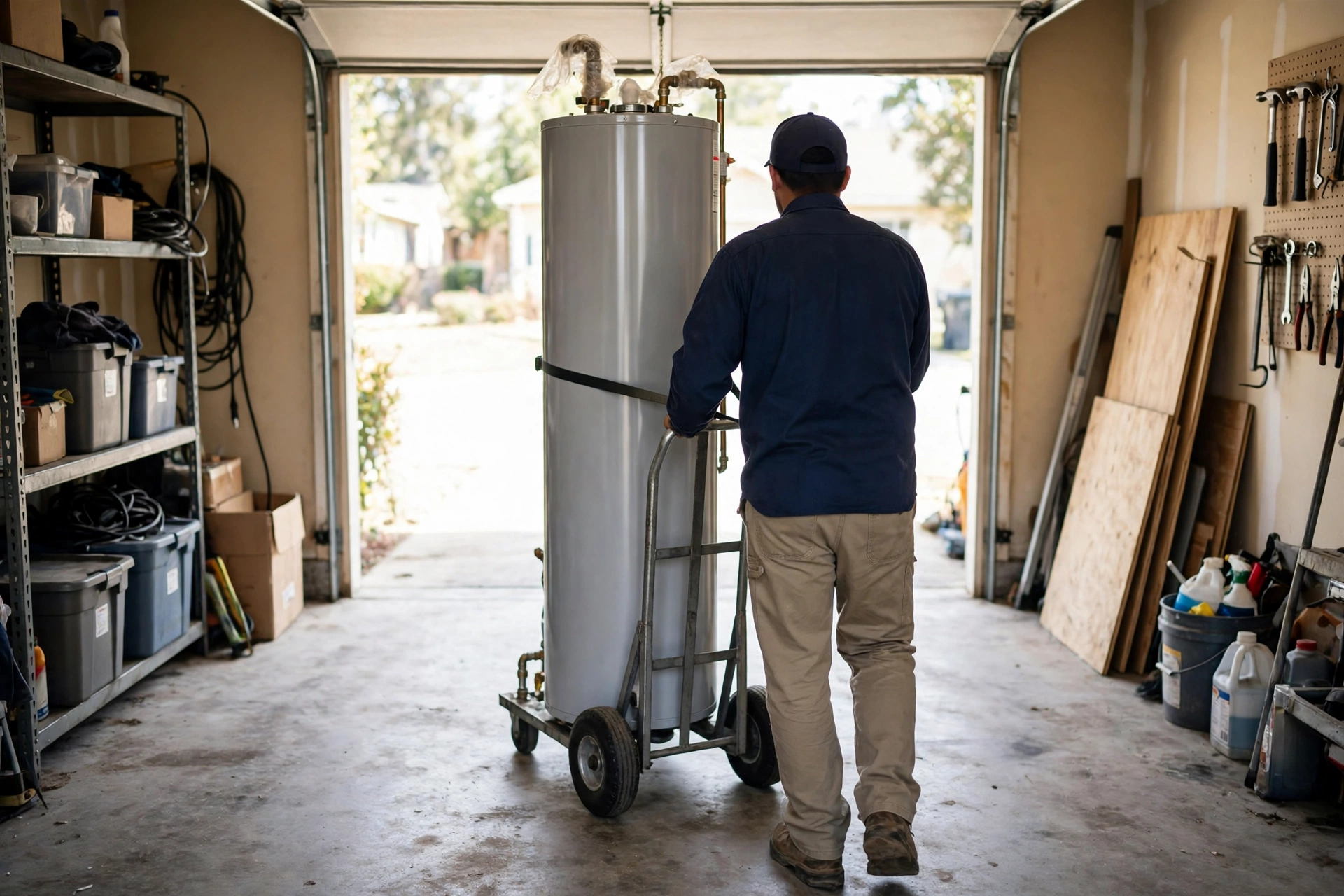
A water heater replacement becomes the right move when a tank leaks, rusts through, or stops heating reliably ...
Learn more
Water heater installation covers new setups in Peoria homes, from new builds in Vistancia to remodels and addi...
Learn more