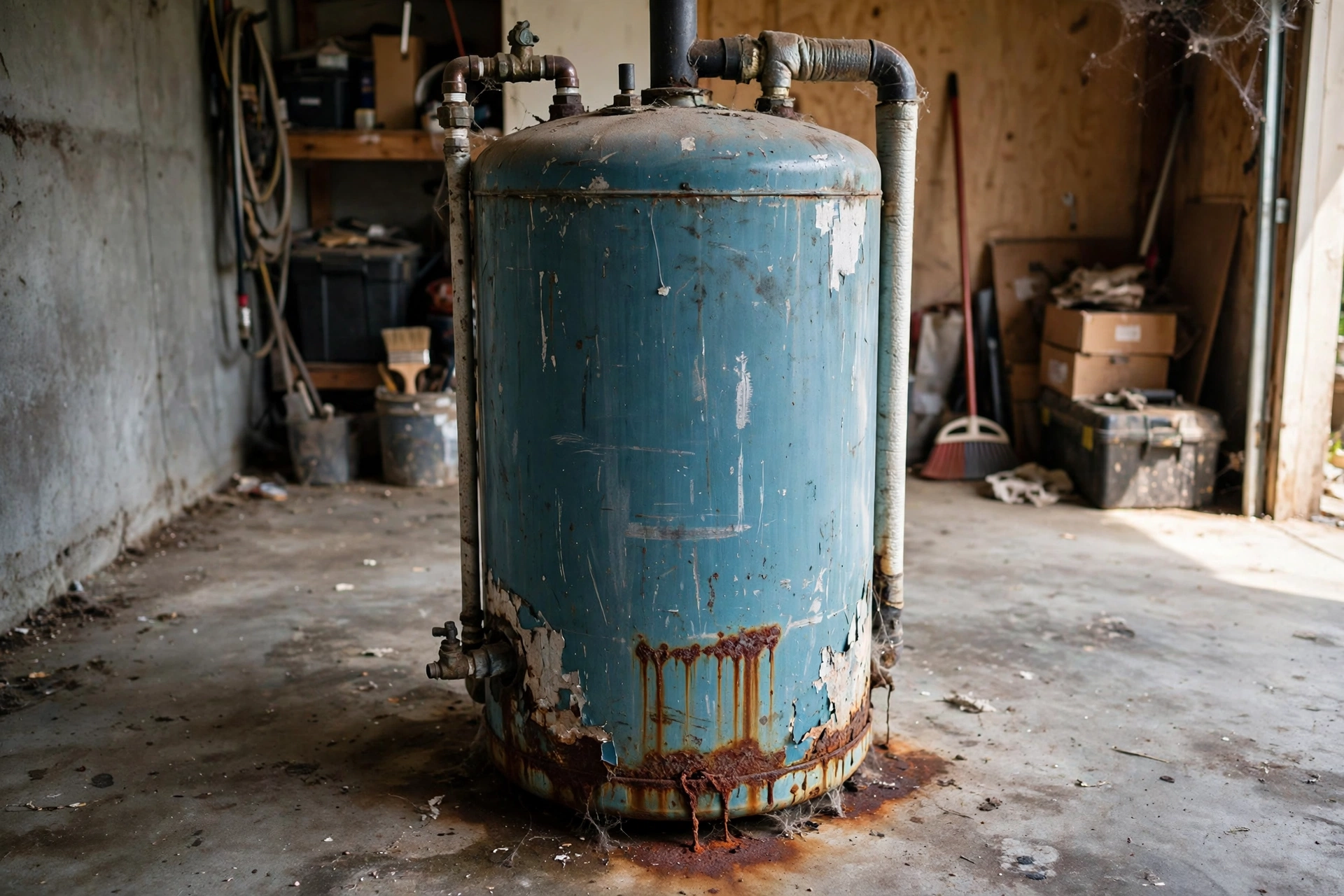
Warning Signs in Older Sun City Water Heaters
Older Sun City water heaters usually warn owners before they fail, through rust tinted hot water, popping soun...
Learn morePeoria tap water leaves its mark. White spots cloud shower glass, crust rims faucets, and a kettle shows mineral film after a few weeks. With Valley hardness running 15 to 25 grains per gallon, many homeowners install a whole home softener to protect fixtures, laundry, and the water heater itself. The softener helps in visible ways, yet it changes the chemistry inside the tank in a way few owners expect. Homes in Sun City West and newer Peoria neighborhoods alike face the same trade: less scale, faster rod wear.
The anode rod sits at the center of that trade. A long metal rod threaded into the top of the tank corrodes on purpose, drawing corrosion away from steel tank walls. Softened water accelerates that sacrifice, shortening rod life and, in some homes, stirring the rotten egg smell that appears only when hot taps run. This post explains ion exchange, rod materials, and odor clues for water heater maintenance planning in Peoria softener households, plus inspection timing that keeps tanks protected.
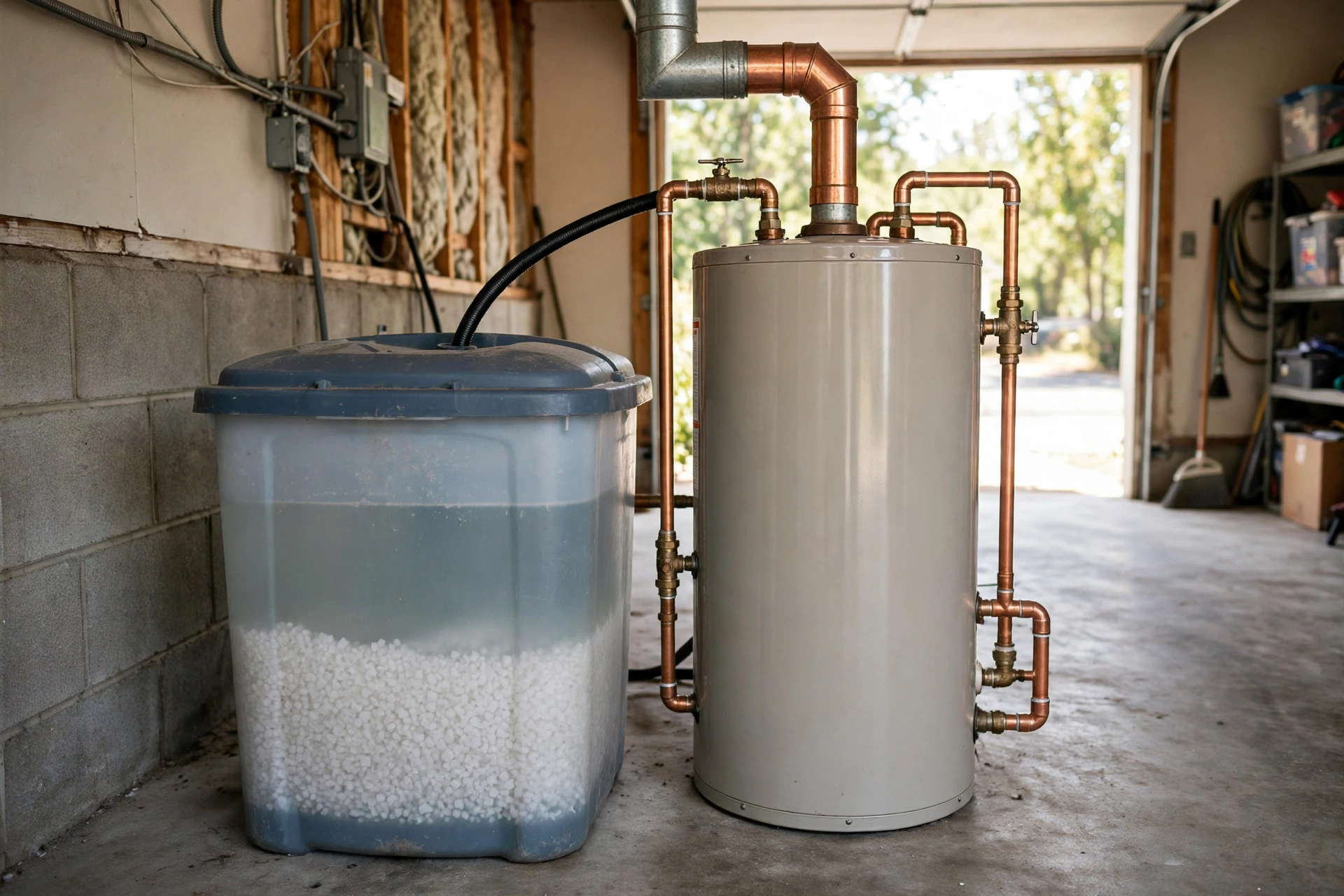
An ion exchange softener passes hard water through a resin bed that swaps calcium and magnesium ions for sodium ions. The resin holds hardness minerals until a regeneration cycle flushes them away with a salt brine, restoring the bed for the next round. Water leaving the softener carries far fewer hardness minerals, so fixtures spot less and scale forms more slowly inside pipes and tanks. The water also carries more sodium and conducts electricity more readily, which matters inside a water heater tank.
A softener does not remove dissolved gases or disinfect water. Hydrogen sulfide gas passes through a softener unchanged, and sulfate reducing bacteria can settle in a resin bed or brine tank that sits idle or goes long without sanitizing. A smell present in both hot and cold water, or only in softened water with a clean bypass sample, points away from the heater and toward the supply or the softener itself. A smell present only in hot water points toward the tank and its rod.
Describe the symptoms and request service anywhere in Peoria and the West Valley.
Every glass lined tank carries a sacrificial anode rod, usually magnesium or an aluminum zinc alloy, threaded into the top of the tank. The rod metal corrodes more readily than steel, so electrochemical activity attacks the rod instead of the tank walls. As the rod thins, pits, and sheds material, the tank stays protected. Once the rod wears down to a thin wire or disappears, that protection fades and the tank walls face corrosion directly. Rod condition, more than tank age alone, often decides how much life a tank has left.
Rod wear hides from view. A homeowner cannot see the rod without opening the tank top, and a tank can heat normally long after the rod has thinned past usefulness. A contractor can pull the rod, judge remaining thickness, and replace it before tank walls suffer. Notes on gas water heater repair and electric upkeep alike stress the same point: rods are consumable parts, not lifetime parts.
Tell us what your unit is doing and request service.
Softened water speeds rod wear through conductivity. Sodium ions raise how readily water carries electrical current, which accelerates the electrochemical reaction that consumes the anode rod. A magnesium rod that might last several years in standard municipal water can wear down far sooner in softened water, producing more hydrogen as it corrodes. That faster sacrifice protects the tank in the short term, yet it leaves the tank exposed sooner unless the rod gets checked and replaced on a tighter schedule.
The trade still favors softeners for many households, since slower scale helps fixtures, pipes, and heating surfaces across the home. Yearly rod checks suit many softener households, while hard water homes without a softener often stretch checks longer. A contractor who knows the softener settings, the rod material, and the tank age can set a check rhythm that fits the home rather than a generic calendar.
Request service and get a straight answer about your unit.
Rotten egg odor in hot water usually traces to hydrogen sulfide gas formed inside the tank. As a magnesium rod corrodes in water carrying sulfate, it releases hydrogen that sulfate reducing bacteria use to convert sulfate into hydrogen sulfide. The gas rides out with hot water, smelling sharpest at the first draw after the tank sits unused. Cold water, which never touches the rod, usually smells normal. That hot only split is a clear clue.
Swapping the rod material often breaks the cycle. An aluminum zinc rod changes the electrochemical reaction and, through its zinc content, suppresses the bacteria that produce the gas. A powered anode sidesteps the dissolving metal reaction entirely, protecting the tank with a small electrical current instead. Flushing and disinfecting the tank alongside a rod swap clears bacteria already present, so odor does not return with the next heating cycle. Notes on electric water heater repair cover rod access on electric tanks, where elements and wiring shape the work.
Do not wait for a small fault to flood the garage. Request service now.
Inspection timing should follow water type, not just tank age. A softener household benefits from a rod look during the first year after a new tank or a new softener goes in, establishing how fast local water wears the installed rod. That baseline guides the next check far better than a guess. Tankless owners face a different maintenance rhythm, since tankless units hold no rod and no stored water, yet still collect scale. The post on descaling a tankless heater in Peoria hard water covers flush timing for those units.
A maintenance visit that covers flushing, rod inspection, thermostat settings, and shutoff valve positions gives a softener household a full picture in one appointment. Owners should keep notes on rod material and flush results, so each visit builds on the last. Desert Valley Water Heater Pros connects Peoria homeowners with independent local plumbing contractors, and a clear maintenance history helps any contractor pick up where the last visit left off.
Request service and talk through sizing, fuel type, and placement.
Read the guide, then describe your water heater problem and we will help arrange the next step.
Yes, in the sense that softened water leaves scale more slowly inside the tank and on heating surfaces. That help comes with a trade, since softened water also wears anode rods faster. Scale protection and rod protection need attention together, with flushing and rod checks on a steady rhythm.
Ion exchange replaces hardness minerals with sodium, which raises water conductivity. Higher conductivity accelerates the electrochemical reaction that consumes the rod, so a magnesium rod corrodes sooner in softened water than in standard water. Tighter inspection timing and a different rod material often balance that faster wear.
The smell usually comes from hydrogen sulfide gas formed when a magnesium rod, sulfate in the water, and sulfate reducing bacteria interact inside the tank. Hot water carries the gas, while cold water usually smells normal. An aluminum zinc rod or a powered anode, plus tank flushing, often clears the odor.
Yearly checks suit many softener households, with the first check in the year after a new tank or softener goes in to establish a wear baseline. Rod material, water use, and softener settings all shape the rhythm. A contractor can adjust the interval based on what each inspection finds.
Answers on ion exchange, rod wear, odor clues, and inspection timing for softener homes.
Request ServiceOlder Sun City water heaters usually warn owners before they fail, through rust tinted hot water, popping soun...
Learn more
Snowbirds leaving Peoria for the summer face a simple choice with real consequences: leave the water heater ru...
Learn more
A heat pump water heater pulls warmth from the air around it and moves that warmth into the tank, rather than ...
Learn more