Tankless Water Heater Installation and Repair
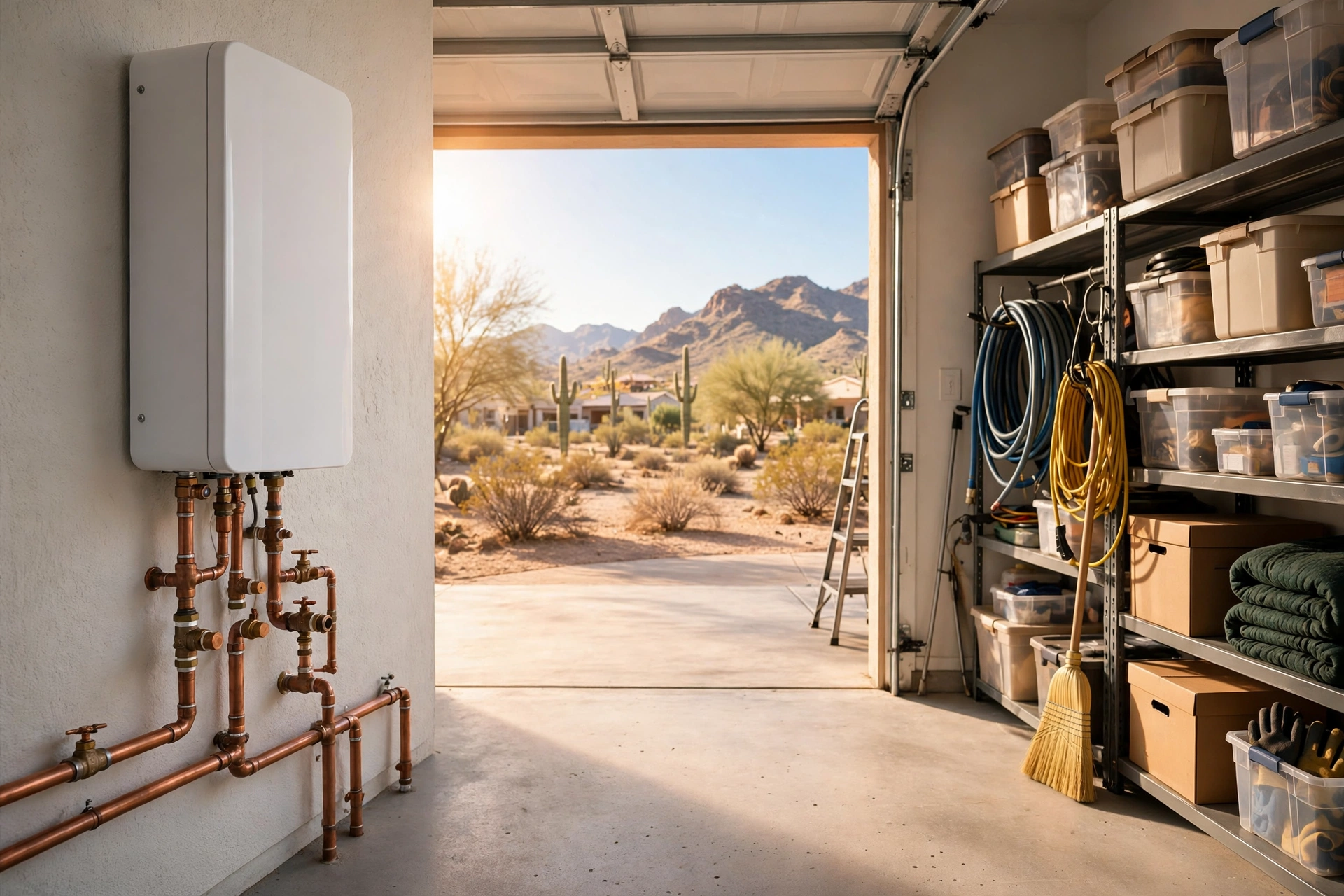
Tankless water heaters heat water only when a tap opens, which suits many Peoria homes where garage space is t...
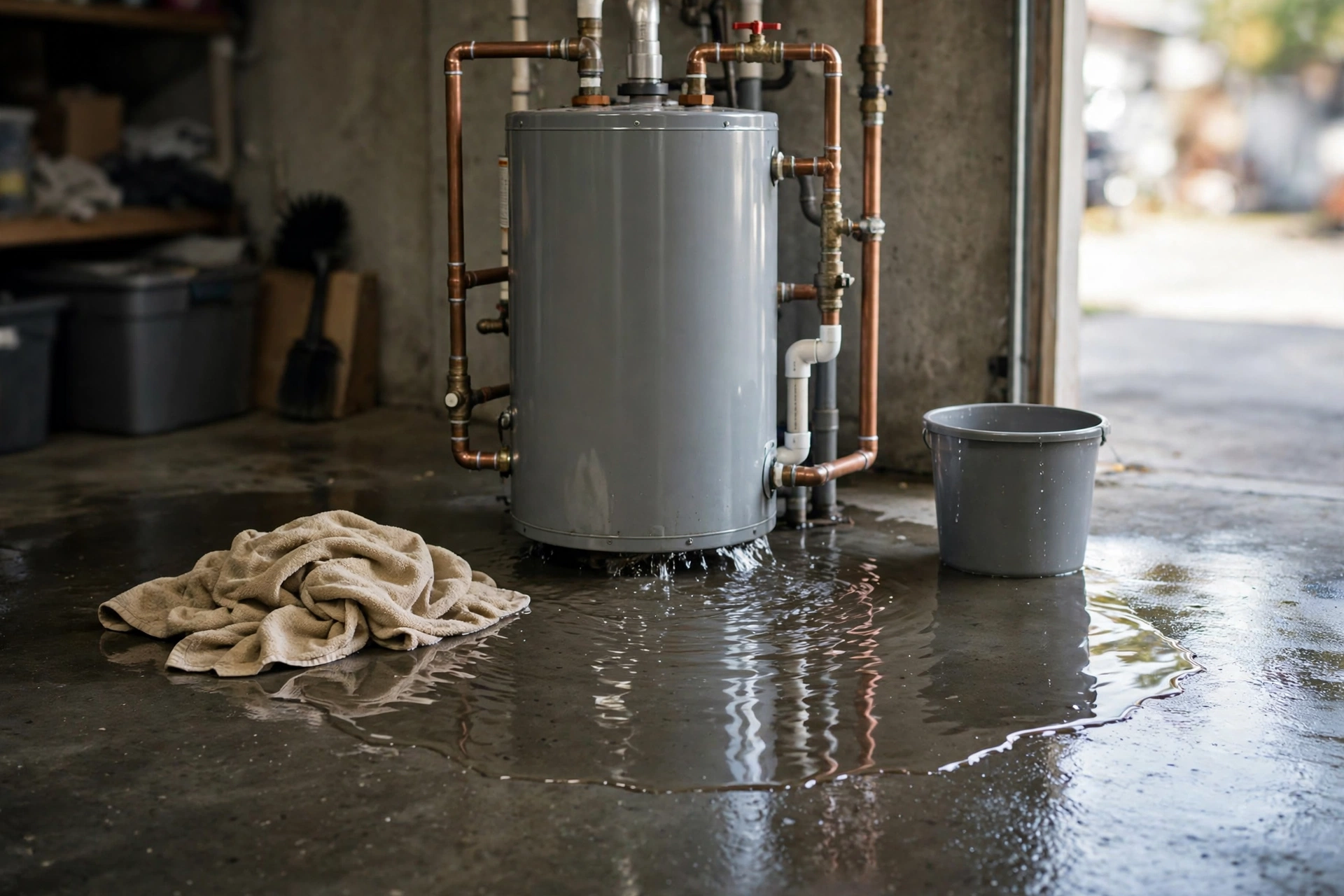
Learn moreFinding water around a water heater stops a household cold, and the first minutes matter. The puddle may be a slow drip from a fitting that has worked loose through years of heat cycles, or it may be the first sign that a tank body has rusted through after a decade in hard water. Either way, water on a slab floor does not stay put. It creeps under boxes, soaks cardboard, reaches drywall at the garage perimeter, and finds the lowest corner of the room. Desert Valley Water Heater Pros connects Peoria homeowners with independent contractors in our network who handle leaking units across the city, from homes near the P83 Entertainment District to quiet streets in the neighborhoods off Bell Road and Happy Valley Road.
Leak repair starts with origin, not with mopping. A contractor traces moisture upward and outward: valve discharge, fitting joints, flex connectors, the drain valve, the TPR discharge pipe, and finally the tank seams and base. Each origin tells a different story and needs a different response. Some leaks resolve with a new valve, a tightened union, or a replaced connector. Others mean the tank itself has failed and replacement is the only sound answer. This page explains how to respond in the first minutes, how contractors trace leaks, and how to protect the home while help is on the way.
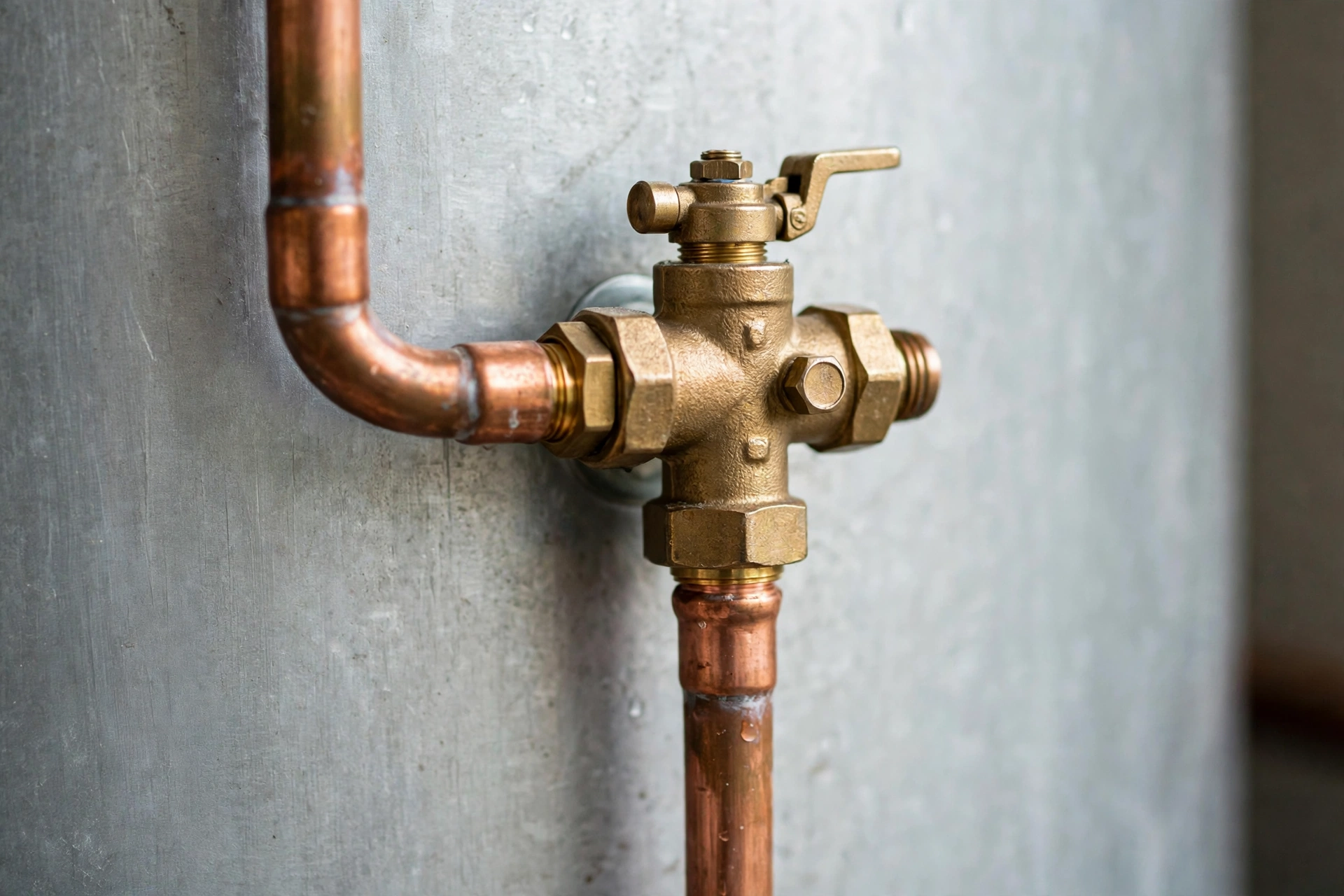
Leaks start at the weakest points in the system, and Peoria conditions create weak points in predictable places. The TPR valve and its discharge pipe leak when pressure climbs or the valve seat wears. Water line unions and flex connectors weep as seals age in garage heat. The drain valve drips after a flush disturbs sediment that was sealing a worn washer. The expansion tank connection leaks when the tank bladder fails and pressure spikes strain every joint. And the tank body itself leaks when corrosion finally breaks through the lining at a seam or the base.
Hard water accelerates nearly all of these paths. Mineral crust builds at joints and hides slow weeps until staining appears. Sediment overheats the tank bottom and stresses the lining. Anode rod depletion removes the protection that holds corrosion back. A contractor reads these clues together: crust patterns, rust staining, damp insulation, and the exact spot where water first appears all narrow the origin before any part is touched. That careful tracing prevents fixing a fitting while a tank leak continues unseen behind it.
Describe the symptoms and request service anywhere in Peoria and the West Valley.
When water appears around the tank, start with safety and shutoffs. Turn off power to an electric unit at the breaker, or set a gas unit control to its off position, before touching wet areas near the heater. Shut off the cold water supply valve to the unit if you can reach it safely, and open a hot tap elsewhere in the home to relieve pressure. Move belongings, boxes, and anything that soaks up water away from the wet area, and lay towels to slow the spread across the slab. Note where the water seems to originate, whether it drips steadily or pools and stops, and when you first noticed it.
Avoid the instinct to keep using hot water normally while a leak is active. Each heating cycle adds pressure and can widen the leak, and a tank that leaks from its body can fail more suddenly than a fitting drip. Do not cap, plug, or seal a dripping TPR discharge pipe, since that valve is a safety release and blocking it creates a hazard. Request service through the contact page with a description of what you found, and keep the area clear so the contractor can trace the leak without moving soaked storage first. The blog on smart leak detectors for traveling homeowners explains how early warning devices help households that travel often.
Tell us what your unit is doing and request service.
Many leaks are repair jobs, and contractors welcome those visits because the fix is direct. A TPR valve that drips constantly usually needs replacement, sometimes alongside an expansion tank check when pressure behavior drives the dripping. A weeping union or flex connector needs a new seal or connector, with attention to corrosion on the mating surfaces. A drain valve that drips after flushing needs a new valve or washer, fitted carefully so the tank threads stay undamaged. Each of these repairs includes a pressure check and a watch period to confirm the drip has truly stopped.
Connection leaks sometimes hide behind insulation or mineral crust, and finding them takes patience. The contractor dries the area, watches each joint under pressure, and checks again after a full heating cycle when expansion pushes joints hardest. A joint that holds cold and weeps hot points to expansion and seal behavior rather than a cracked fitting. That distinction matters, because the lasting fix may involve pressure management as well as the joint itself. Homeowners should expect the contractor to explain the origin plainly and show the failed part when possible.
Request service and get a straight answer about your unit.
A leak from the tank body itself is a different matter from a fitting leak, and it means replacement. Tank steel, once corroded through, cannot be patched reliably, and sealants or external patches only hide a failure that continues inside. The leak may start as dampness at the base seam, a rust stain that grows week by week, or a pinhole spray that appears only during heating. Any of those signs on an aging tank points to internal corrosion that has reached the outside, and the tank will not heal or stabilize on its own.
Age and water history confirm the diagnosis. Tank water heaters in Arizona usually last 6 to 10 years, and a leaking tank near or past that span with rusty water and a depleted anode rod has reached its end. The contractor confirms the leak origin, checks that no fitting above the tank is dripping down and mimicking a tank leak, and then explains replacement options and timing. Acting promptly matters, because a pinhole leak can widen without warning and release the full tank volume onto the slab. The page on water heater replacement explains how removal and sizing work when a tank leak forces the decision.
Do not wait for a small fault to flood the garage. Request service now.
Slab-on-grade construction shapes leak damage in Peoria. With no basement to catch water, a leak spreads horizontally across the garage floor, under storage, and toward walls. Drywall at the garage perimeter wicks moisture upward, cardboard boxes disintegrate, and items stored directly on the slab soak through from below. In summer, garage temperatures past 110 degrees dry surfaces quickly on top while moisture lingers underneath and inside wall cavities, which can hide damage until staining or odor appears weeks later.
Long pipe runs and distant bathrooms add another wrinkle, since a leak at the heater is not the only leak a household may face. A damp spot far from the heater may trace back to a supply line rather than the tank, and a contractor checks the surrounding plumbing when the origin stays unclear. Homeowners with large homes and long runs can read the guide to recirculation pumps for large West Valley homes to understand how those systems interact with leak detection. After any significant leak, drying the area thoroughly and checking stored items and wall bases prevents a plumbing problem from becoming a lingering moisture problem.
Request service and talk through sizing, fuel type, and placement.
Prevention after a leak repair focuses on pressure, protection, and watching. The contractor checks system pressure behavior, confirms the expansion tank holds its charge, and tests the TPR valve so pressure has a safe release path. Anode rod condition gets a look on tank units, since rod depletion invites the corrosion that causes tank leaks. Annual water heater maintenance keeps those checks on a rhythm, with flushing that removes the sediment layer that overheats tank bottoms and strains linings.
Homeowners play a part too, with simple habits that catch trouble early. A monthly glance at the tank base, valves, and connections takes a minute and reveals drips, crust, and staining before they grow. Knowing the shutoff locations before an emergency turns a panic into a procedure. Households in Goodyear and Avondale follow the same habits, and traveling homeowners add leak detection devices for the months the house sits empty. The combination of professional checks and homeowner awareness keeps small leaks small.
Related: request leak repair service, gas unit leak checks, electric unit leak checks
Request service and describe what your water heater is doing.
Describe what your unit is doing and we will help arrange the next step.
Turn off power or set the gas control off, shut off the cold supply valve if you can reach it safely, and move belongings away from the water. Open a hot tap elsewhere to relieve pressure and note where the water originates. Request service promptly and avoid blocking a dripping TPR discharge pipe.
No, a leak from the tank body itself means the tank needs replacement. Corrosion that has broken through the lining continues inside even if the outside is sealed, and patches hide a failure that can widen suddenly. A contractor confirms the leak comes from the tank body rather than a fitting above it before advising replacement.
A dripping TPR valve can mean a worn valve seat, high system pressure, or a failed expansion tank allowing pressure spikes. A contractor tests the valve, checks pressure behavior, and inspects the expansion tank together. Never cap or plug the discharge pipe, since the valve is a safety release.
Tracing starts by drying the area and watching each joint under pressure, then checking again after a heating cycle. Fitting leaks appear at unions, connectors, valves, or the drain valve, while tank leaks appear at seams or the base with rust staining. A contractor traces the origin before recommending repair or replacement.
Yes, small drips deserve prompt attention in slab homes where water spreads across the garage floor. A drip that seems minor can signal pressure trouble, a failing valve, or early tank corrosion. Early attention often means a simple valve or fitting fix instead of a larger repair later.
Know your shutoff locations, arrange a maintenance visit before a long absence, and consider leak detection devices that alert you to water where it should not be. A contractor can check valves, connections, and the expansion tank before departure. The travel season guide linked on this page covers shutdown steps for empty homes.
Not seeing your question? Request service and describe what your unit is doing.
Request ServiceTankless water heaters heat water only when a tap opens, which suits many Peoria homes where garage space is t...
Learn more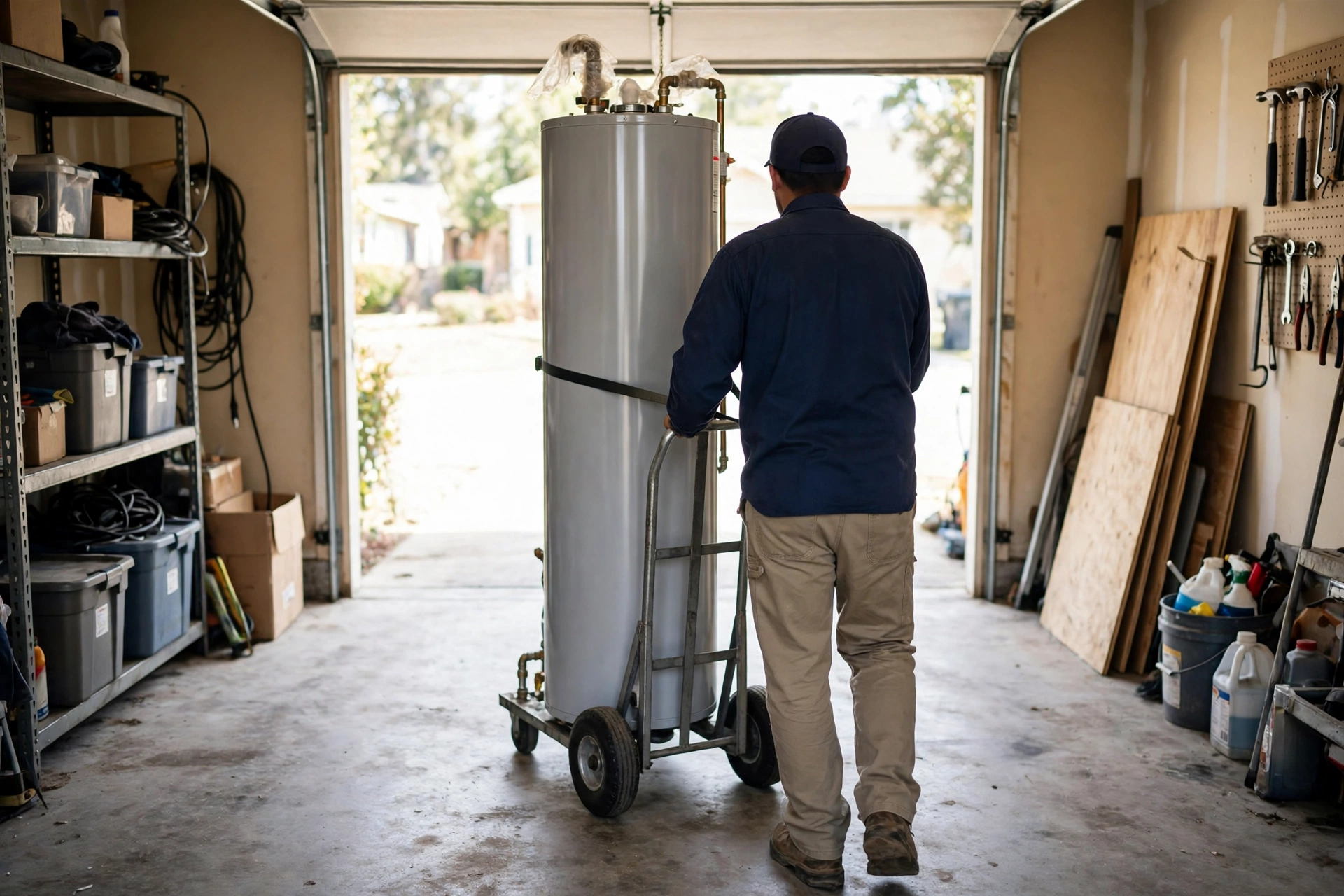
A water heater replacement becomes the right move when a tank leaks, rusts through, or stops heating reliably ...
Learn more
Water heater installation covers new setups in Peoria homes, from new builds in Vistancia to remodels and addi...
Learn more