Tankless Water Heater Installation and Repair
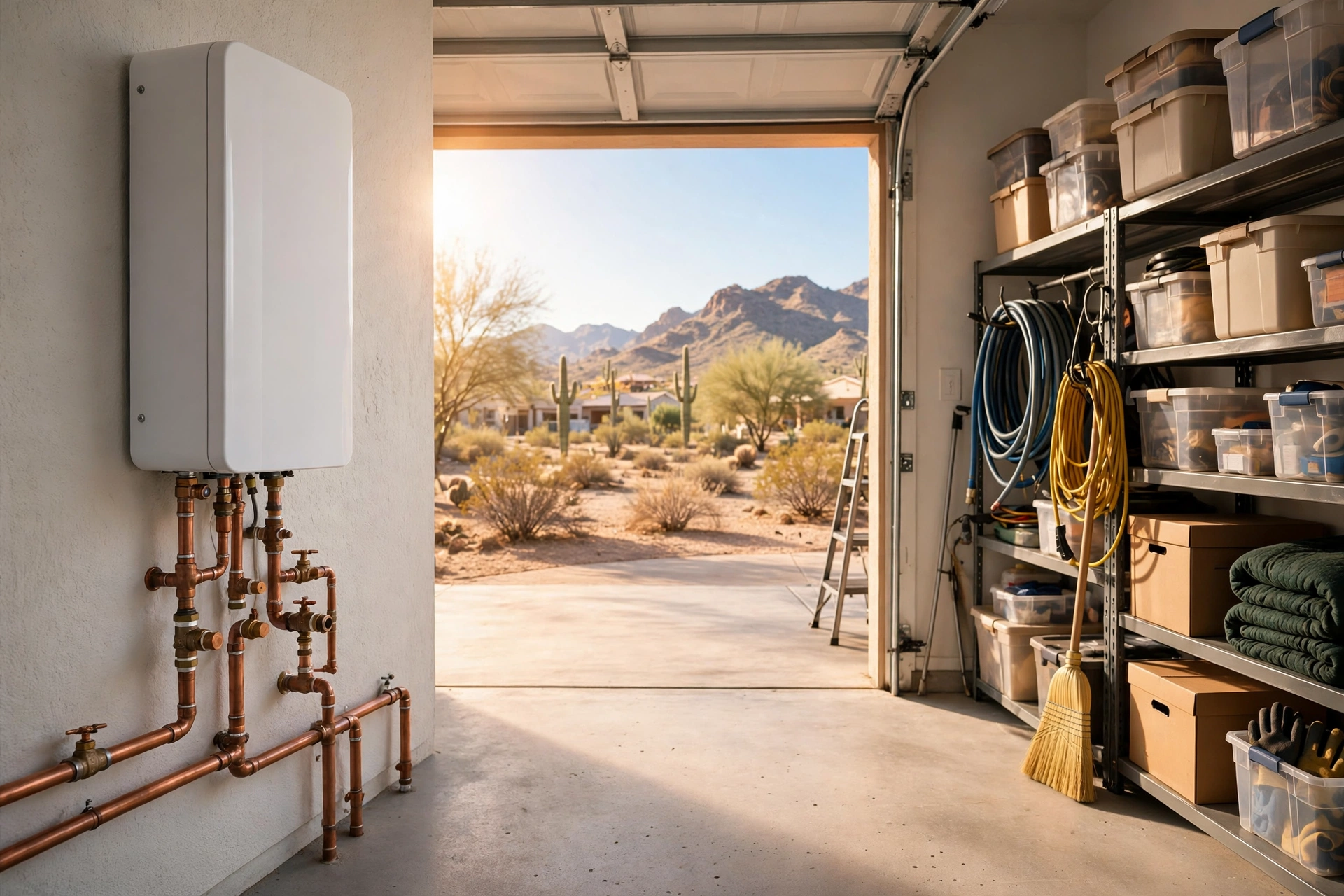
Tankless water heaters heat water only when a tap opens, which suits many Peoria homes where garage space is t...
Learn moreEvery water heater reaches a point where another repair only postpones the inevitable, and Peoria conditions bring that point sooner than many homeowners expect. Hard water eats at anode rods and tank linings, summer garage heat bakes every component, and sediment builds up year after year in homes from Arrowhead Towne Center to the neighborhoods near Lake Pleasant Regional Park. When hot water turns rusty, the tank rumbles like a kettle, or moisture appears where the tank meets the slab, replacement moves from a someday thought to a this week decision. Desert Valley Water Heater Pros exists to make that decision clearer by connecting homeowners with independent contractors who replace water heaters across Peoria and the West Valley every week.
Replacement is not just swapping one box for another. The new unit must fit the space, match the household demand, connect safely to water, gas or power, and vent correctly for the home it serves. A family in a Vistancia new build has different needs from a retired couple in Ventana Lakes, and a household near the Peoria Sports Complex with teenagers home for spring training season uses hot water very differently from a snowbird household empty half the year. The contractors in our network size and select replacements around those real patterns, and they remove the old unit as part of the job so the homeowner is not left with a dead tank in the garage.
Age is the first clue. Tank water heaters in Arizona usually last 6 to 10 years, and a tank near the end of that span that needs frequent attention is telling a consistent story. Rust colored hot water, a tank that leaks from the body itself rather than a fitting, and rumbling that persists after flushing all point toward internal decline that repairs cannot reverse. A contractor can confirm the age from the maker label, check the anode rod, and look for corrosion at seams and connections before advising on next steps.
Frequency matters as much as age. One failed element or thermostat on a mid life tank is a repair. Three separate faults in one season on an aging tank is a pattern, and each visit addresses a symptom while the tank itself keeps weakening. Homeowners sometimes hold on because the unit still produces some hot water, but a tank that leaks without warning can soak a garage, damage stored belongings, and spread across a slab floor before anyone notices. Replacement on a planned day beats replacement after a surprise leak, and the guide to signs of water heater failure in older homes walks through the warning signs in more detail.
Describe the symptoms and request service anywhere in Peoria and the West Valley.
The tank versus tankless choice shapes daily life for years, so it deserves more than a quick guess. A tank unit stores heated water and delivers it immediately when a tap opens, which suits households with steady, predictable use and a garage spot that already fits a tank. A tankless unit heats water on demand and frees up floor space, which appeals to homeowners who want endless back to back showers or need the garage space for storage, a workshop, or a vehicle. Neither option is right for every home, and the best fit depends on household size, fixture count, and how hot water gets used on busy mornings.
Contractors in our network walk through the tradeoffs without pushing one answer. They ask about simultaneous showers, laundry habits, dishwasher use, and whether the household grows during holidays or spring training visits. They also look at the existing venting, gas supply, and water lines, since those realities affect what can be installed cleanly. Homeowners weighing the switch can read about tankless water heater installation and repair to understand descaling needs and sizing before deciding.
Tell us what your unit is doing and request service.
Peoria water heaters usually sit in garages, and that placement shapes every replacement. Summer garage temperatures climb past 110 degrees, which means the unit, its connections, and its venting live in serious heat for months at a time. A replacement must sit level on the slab, with clear access for future service, flushing, and anode rod checks. Tight corners, stacked storage, and water softener equipment all compete for the same wall space, so measuring the real space matters more than assuming the new unit will fit where the old one sat.
Monsoon season adds its own wrinkle. Dust storms push fine grit into garages and around vent terminations, and a sudden downpour can send water toward garage entries. Contractors check the floor for slope and drainage, confirm the vent path stays clear, and make sure shutoff valves are reachable without moving heavy storage. In homes near Westwing Mountain and Sunrise Mountain where lots back onto desert open space, dust and critter intrusion around exterior vents get extra attention during the replacement visit.
Request service and get a straight answer about your unit.
An undersized replacement disappoints every morning, while an oversized one wastes space and energy heating water nobody uses. Sizing starts with people and fixtures: how many bathrooms, how many occupants, whether showers overlap, and whether the laundry and dishwasher run at the same time. A household of two in Sun City West has a different peak hour from a household of six near Happy Valley Road, even if the homes look similar from the street. Contractors size for the peak, not the average, because peak hour is when complaints happen.
Tank sizing and tankless sizing follow different logic, and a contractor explains both in plain language. For tanks, the question is stored volume plus recovery speed. For tankless units, the question is flow at the temperature rise the home needs on a cool morning. Either way, the household routine drives the answer, not a rule of thumb pulled from a chart. Homeowners with large families can explore demand planning further in the post on sizing a water heater for a large household before requesting service.
Do not wait for a small fault to flood the garage. Request service now.
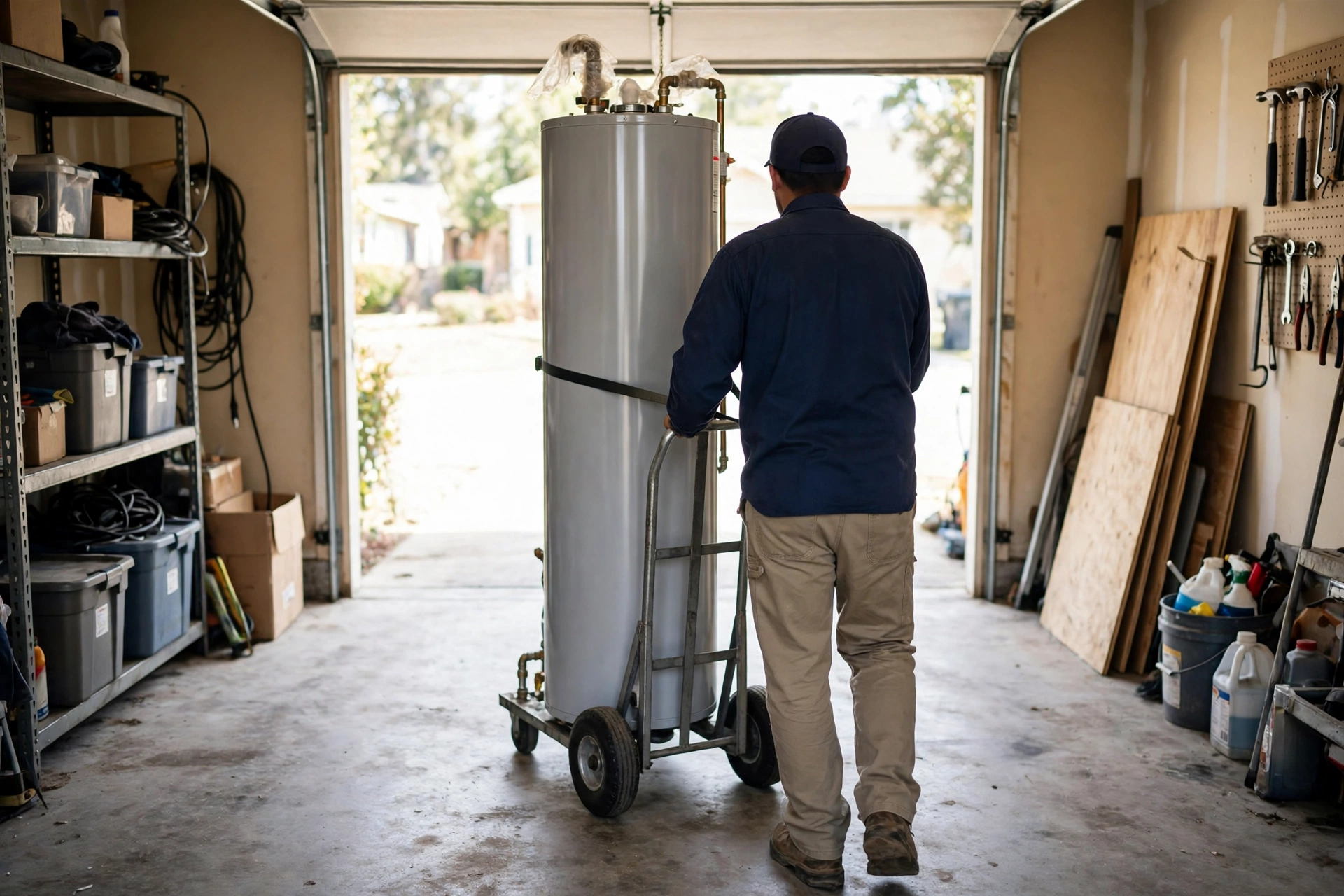
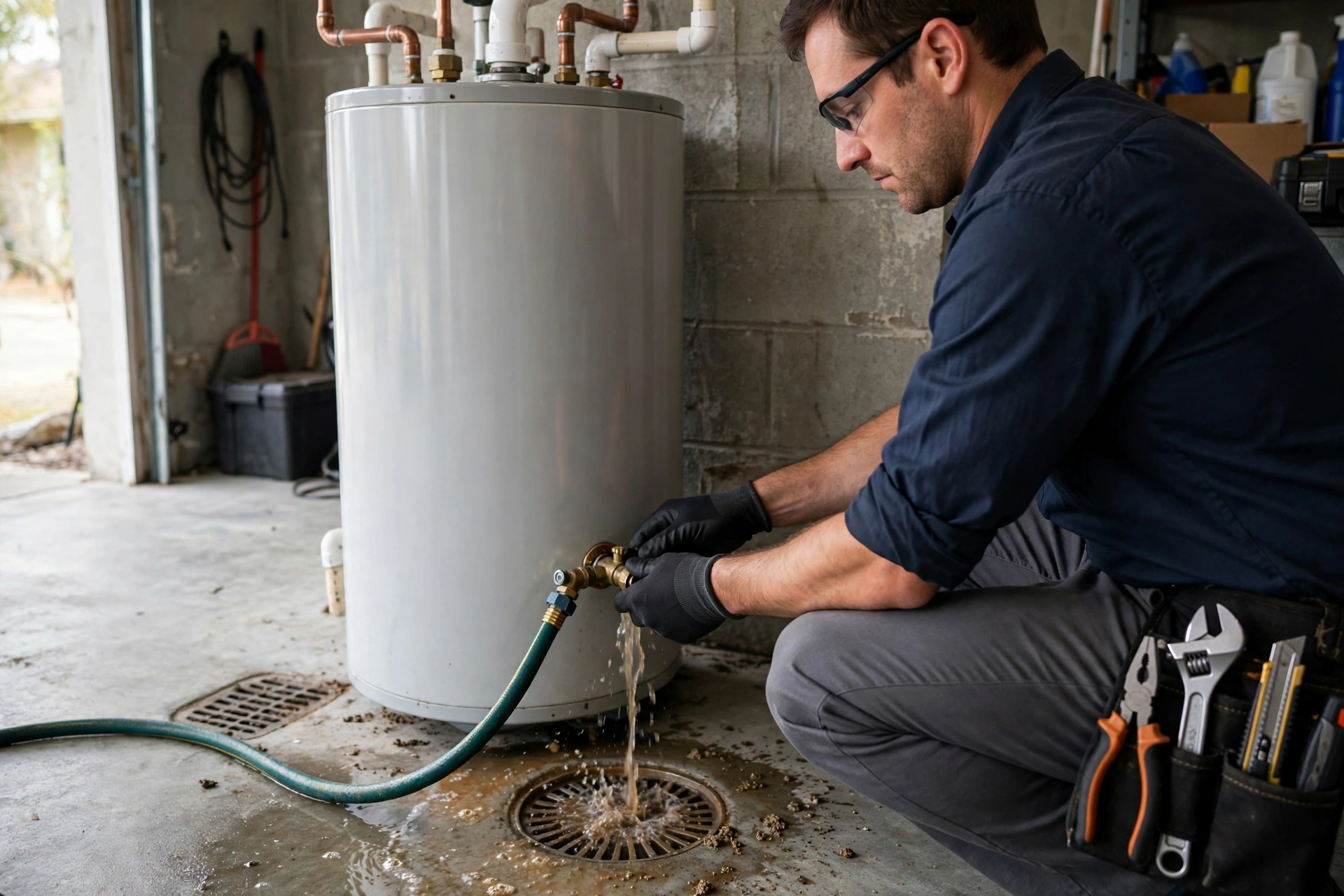
Removal day follows a careful sequence. The contractor shuts off water and the gas supply or power, drains the old tank, disconnects water lines and venting, and moves the old unit out without dragging it across the slab or damaging nearby walls. Draining takes patience, especially on a tank heavy with sediment, and rushing that step makes a mess that is hard to clean from a garage floor. Once the old unit is out, the space gets a fresh look: the floor, connections, shutoffs, and vent path are checked before the new unit goes in.
Preparation often reveals small issues worth fixing while the space is open. A stiff shutoff valve, a corroded flex connector, a dripping union, or a vent section that has shifted over years of heat cycles can all be addressed during the same visit. The expansion tank also gets a look, since a failed expansion tank puts pressure strain on a brand new heater from day one. Handling these details during replacement means the new unit starts life in a space that is ready for it.
Request service and talk through sizing, fuel type, and placement.
A new water heater starts with a clean slate, and the habits of its first year set the tone for its whole life. Annual flushing for tanks and annual descaling for tankless units keep sediment and scale from building the layer that shortens service life in hard water country. Anode rod checks protect the tank lining, TPR valve tests confirm the safety release works, and a quick look for drips at connections catches small leaks before they grow. Contractors in our network explain a simple care rhythm at handover so the homeowner knows what to expect and when.
Households in Avondale, Goodyear, and across the West Valley follow the same care pattern, because hard water does not respect city lines. Setting the thermostat to 120 degrees, the commonly recommended setting, balances comfort with care for the unit. Homeowners who leave for the summer can read the guide to snowbird water heater shutdown for summer for travel season steps that protect a new unit while the house sits empty.
Related: request a replacement visit, new water heater installation, leaking water heater help
Request service and describe what your water heater is doing.
Describe what your unit is doing and we will help arrange the next step.
Age, rust, and tank body leaks are the strongest signals. A tank past 6 to 10 years that produces rusty water, leaks from the tank itself, or needs repeated repairs is usually better replaced. A contractor can confirm the age, check the anode rod, and look for corrosion before advising on repair or replacement.
The answer depends on household demand, garage space, venting, and gas supply. Tanks suit steady predictable use and existing tank spaces, while tankless units suit back to back showers and tight garages. A contractor looks at your routines and existing connections, then explains both paths so the choice fits the home.
The contractor drains the old unit, disconnects it, and removes it from the home as part of the replacement visit. Draining a sediment heavy tank takes time, and careful removal protects the slab floor and nearby walls. The space is then checked and prepared before the new unit is set in place.
Timing varies with the type of unit, the condition of existing connections, and whether venting or supply lines need adjustment. A straightforward tank for tank swap moves faster than a switch to tankless, which may need venting and gas supply changes. The contractor explains the expected sequence before work begins.
Yes, hard water care starts from day one. Tanks need annual flushing and anode rod checks, while tankless units need annual descaling. Valley water commonly measures 15 to 25 grains per gallon in hardness, so mineral buildup begins immediately. Steady care from the start helps a new unit reach its full expected life.
Yes, sizing should cover the busiest realistic hour, including guests, overlapping showers, and laundry running at the same time. A contractor asks about peak use, not just average use, so the new unit keeps up when the house is full. Homes near the Peoria Sports Complex often see extra guests during spring training season.
Not seeing your question? Request service and describe what your unit is doing.
Request ServiceTankless water heaters heat water only when a tap opens, which suits many Peoria homes where garage space is t...
Learn more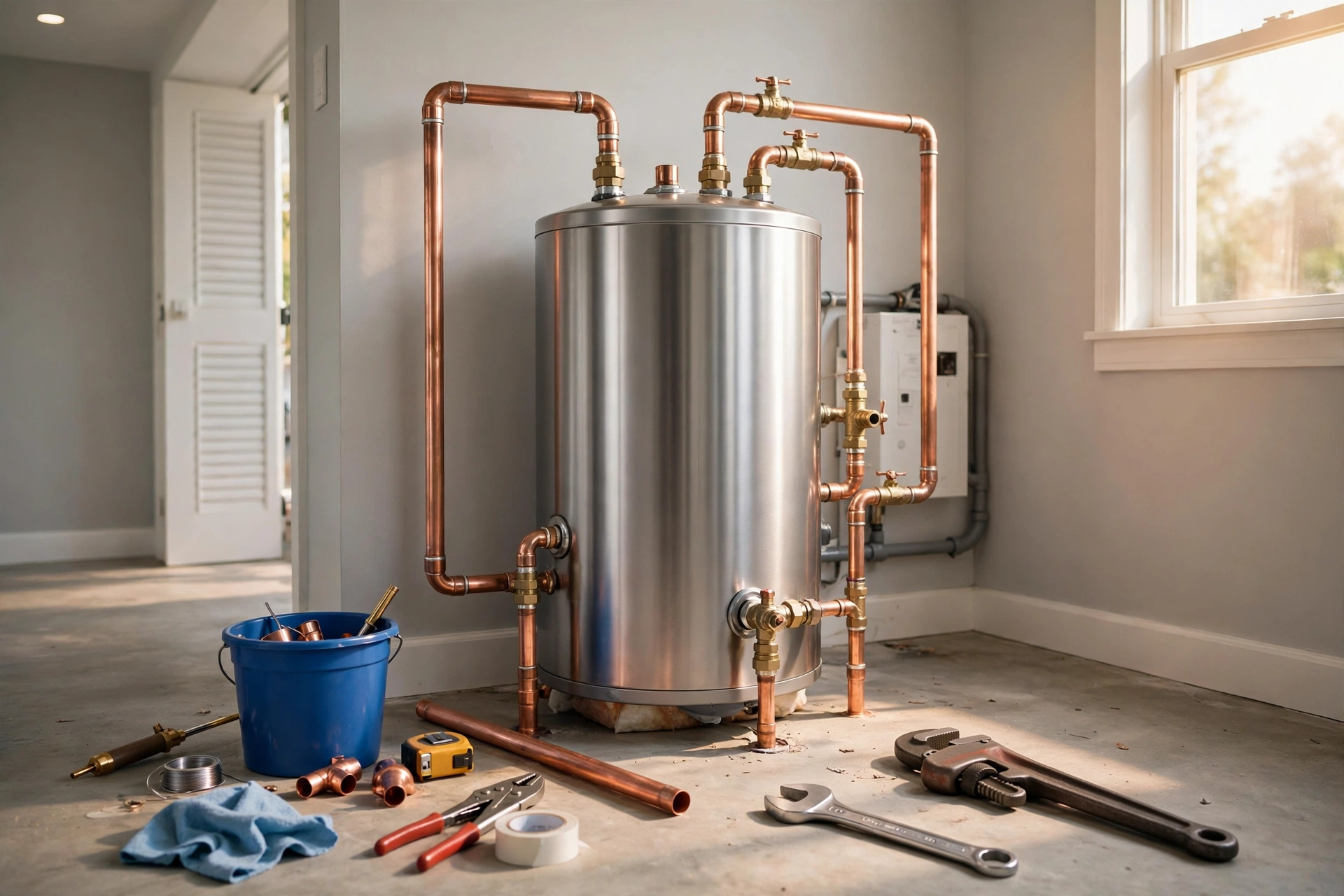
Water heater installation covers new setups in Peoria homes, from new builds in Vistancia to remodels and addi...
Learn more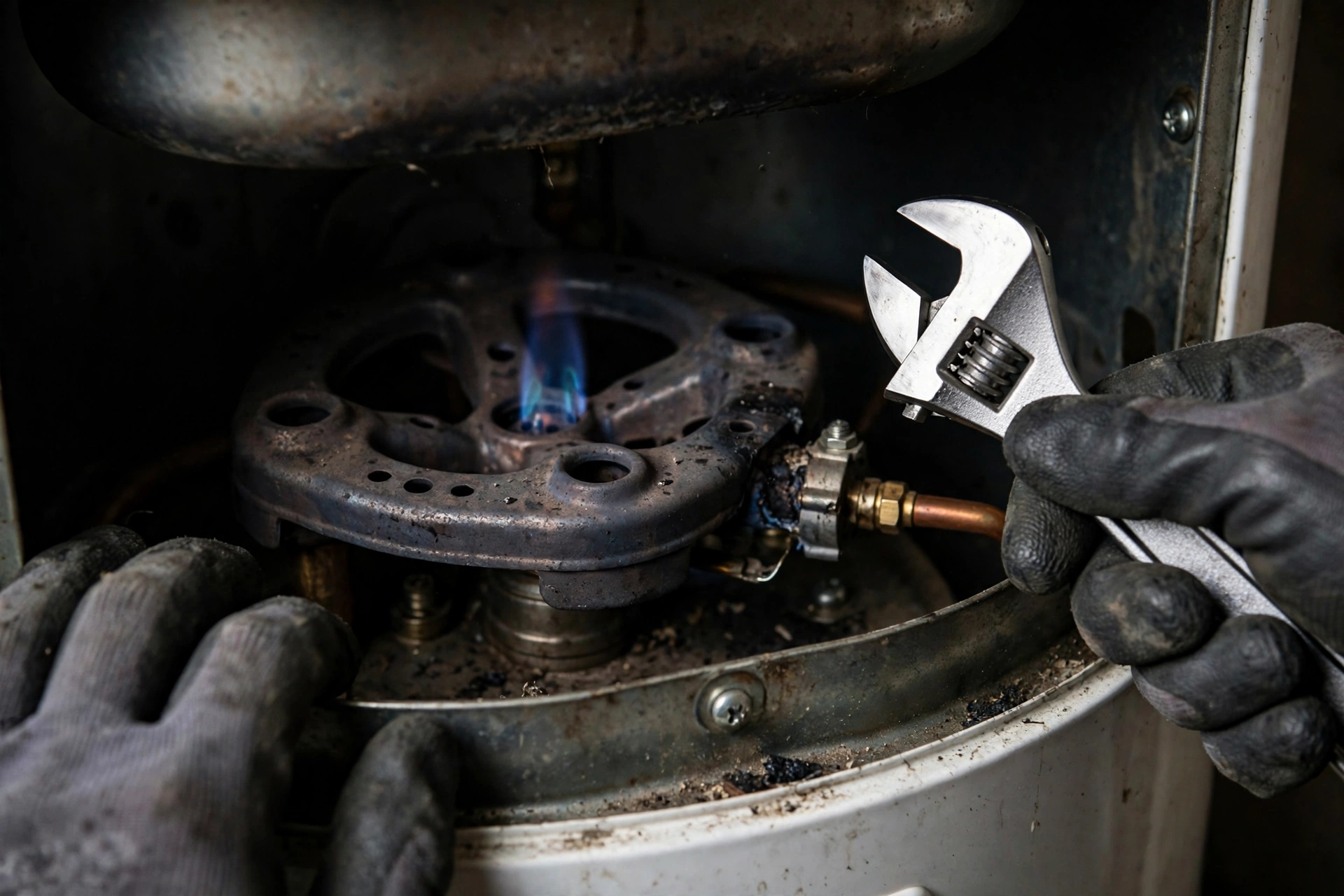
Gas water heaters in Peoria heat water with a burner under the tank, controlled by a thermostat and gas contro...
Learn more