Water Heater Replacement
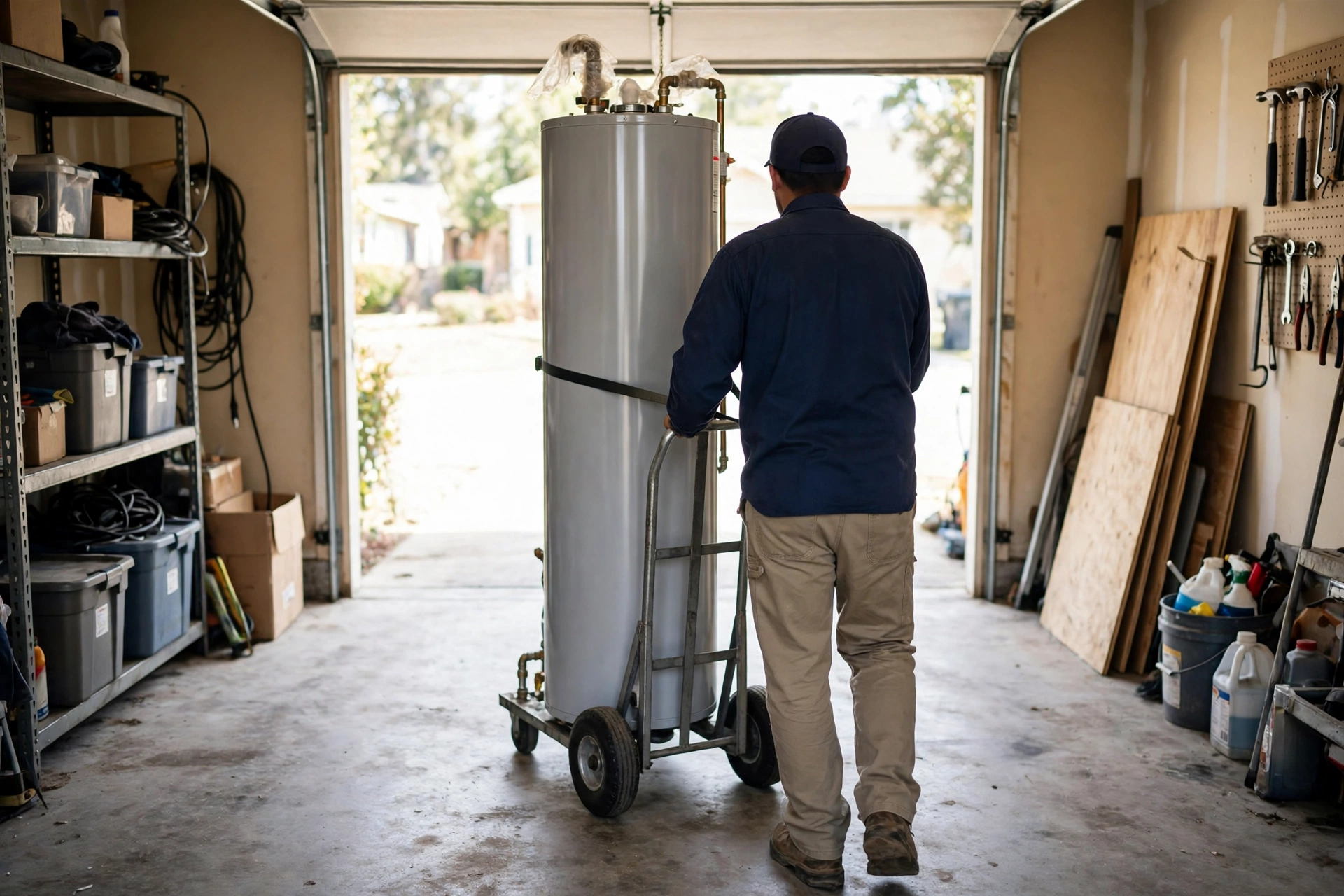
A water heater replacement becomes the right move when a tank leaks, rusts through, or stops heating reliably ...
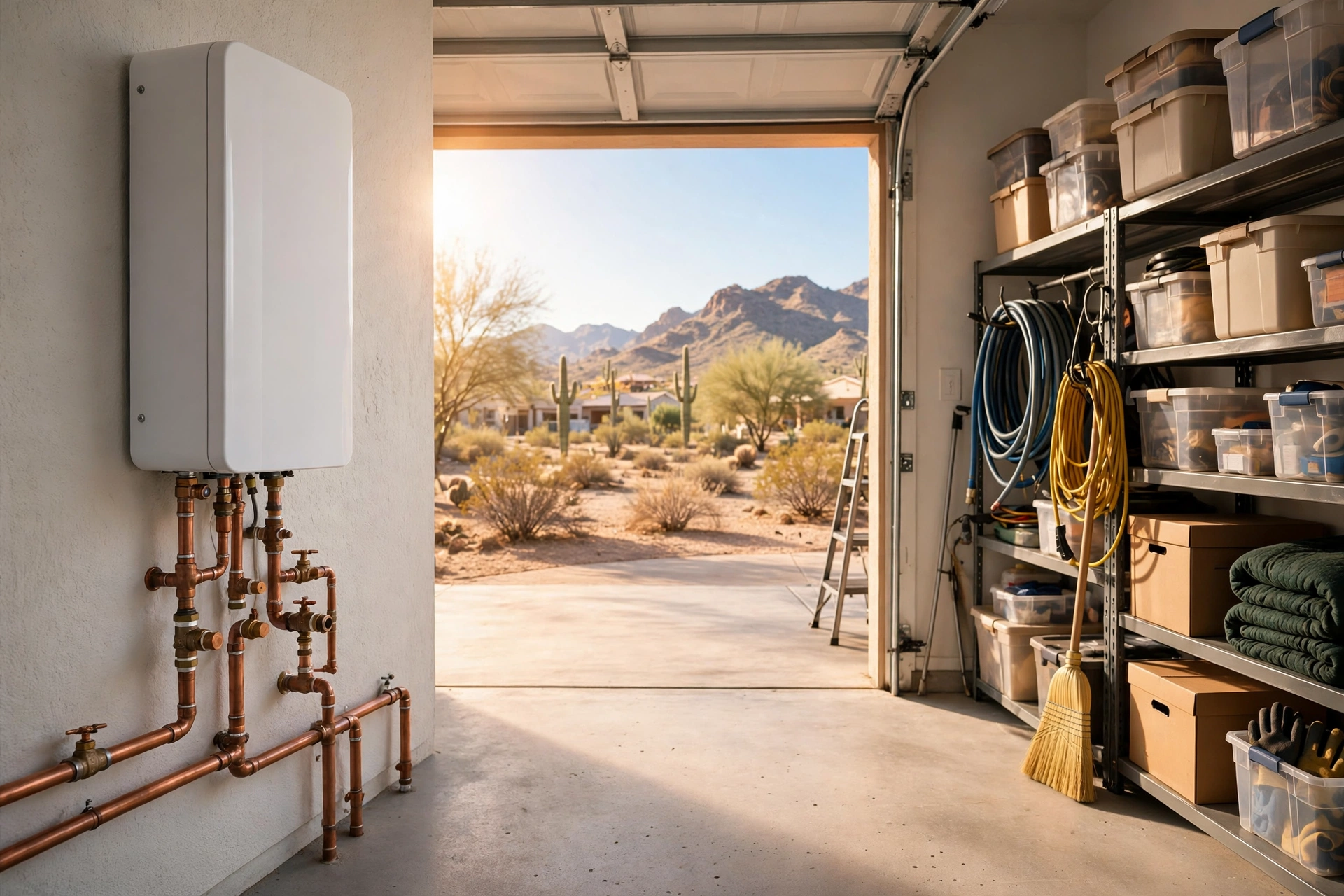
Learn moreA tankless water heater looks nothing like the big tank most Peoria homeowners grew up with, and that is the point. Instead of keeping dozens of gallons hot around the clock in a garage that climbs past 110 degrees in summer, a tankless unit fires up only when someone opens a hot tap. For households near Bell Road, in Vistancia, or in the 55 plus communities around Westbrook Village, that on demand design can mean steady hot water for back to back showers without a bulky tank taking up floor space. Desert Valley Water Heater Pros connects homeowners with independent contractors who know these units well, from compact installs in newer Sunrise Mountain area homes to replacements for aging tanks in older neighborhoods near Grand Avenue.
Tankless units reward steady care and punish neglect, especially in Peoria. The same hard water that leaves spots on shower glass also leaves mineral scale inside a tankless heat exchanger, a little at a time, until flow drops and temperatures swing. That is why this page covers sizing, descaling, venting, and the warning signs that mean something needs attention. Regular water heater maintenance keeps a tankless unit working the way it should, and the contractors in our network handle both the routine visits and the repairs when a unit stops working as expected.
Peoria sits in the Phoenix Valley, where water commonly measures 15 to 25 grains per gallon in hardness. Every gallon that passes through a tankless heat exchanger leaves a trace of calcium and magnesium behind. On a tank unit that mineral settles at the bottom. On a tankless unit it coats the narrow passages where water picks up heat, which narrows flow and forces the burner to work harder for the same result. Over months without descaling, a homeowner may notice the shower takes longer to warm up or the temperature drifts while washing dishes.
Descaling flushes a mild acid solution through the heat exchanger to dissolve that buildup, and contractors in our network treat it as routine care rather than an emergency fix. Homes with more occupants, more bathrooms, or a recirculation loop tend to build scale faster because more water moves through the unit each day. A contractor can look at household size, water use patterns, and the age of the unit, then set a descaling rhythm that fits the home instead of guessing. Annual descaling is the usual pattern that supports a 15 to 20 year service life in Arizona.
Describe the symptoms and request service anywhere in Peoria and the West Valley.
Tankless units give clear signals when something is wrong, and Peoria homeowners learn to read them quickly. The most common complaint is temperature swing: hot water that starts strong, turns lukewarm, then heats up again without anyone touching a tap. That pattern often traces back to scale buildup, a dirty inlet filter, or a flow sensor that is struggling to read demand. Another signal is reduced flow at hot taps while cold taps run normally, which points to a restriction inside the unit or at the filter.
Other signs deserve prompt attention. An error display that keeps returning, a unit that ignites then shuts down, rumbling or vibration during heating, and water pooling under the unit all mean the system needs a hands on check. Gas units with venting trouble may shut down as a protective response, and that shutdown should never be ignored or worked around. Request service through the contact page if any of these signs appear, and note what the display shows and when the trouble started so the contractor arrives with useful context.
Tell us what your unit is doing and request service.
Sizing a tankless unit is about matching the heater to the busiest hour in the house, not to the square footage on a listing. A couple in a Trilogy at Vistancia home who shower at different times needs far less simultaneous capacity than a household near the P83 Entertainment District where two showers, a dishwasher, and a laundry load all run on a Saturday morning. Contractors in our network ask about bathrooms, occupants, and daily routines before recommending a size, because an undersized unit will always disappoint at the worst moment.
Groundwater temperature matters too. Incoming water runs warmer in a Peoria summer than it does on a cool January morning, so a unit that keeps up easily in July can struggle in winter if it was sized only for warm weather. A careful sizing conversation covers winter performance, fixture counts, and whether a second unit or a different configuration fits a large home better. Homeowners planning for a growing household can read more about demand planning in the guide to sizing a water heater for a large household before requesting service.
Request service and get a straight answer about your unit.
Descaling is the single most important routine for a tankless unit in the West Valley. The process isolates the heater, circulates a descaling solution through the heat exchanger, and flushes it clean so water can move freely and pick up heat evenly again. Contractors also clean the inlet water filter and check the condensate drain on condensing models during the same visit, since a clogged filter or drain can mimic bigger problems. The whole visit is methodical rather than dramatic, and most homeowners notice steadier temperatures right away.
Skipping descaling year after year lets scale harden into a stubborn layer that reduces efficiency and strains the burner. In hard water country that neglect shortens the useful life of the unit and turns a routine visit into a repair visit. Peoria homeowners who travel for the summer or leave a home empty for weeks should still keep the annual rhythm, because scale does not pause while the house sits quiet. The blog on descaling a tankless unit in Peoria hard water explains what buildup does inside the exchanger and why timing matters.
Do not wait for a small fault to flood the garage. Request service now.
Tankless units need proper venting and an adequate gas supply, and both deserve attention during installation and repair. Vent runs must carry exhaust outside safely and stay clear of blockages, which matters in Peoria where monsoon dust and windblown debris find their way into outdoor terminations. A contractor checks the vent path, looks for sagging or disconnected sections, and confirms the termination sits clear of obstructions. On condensing units the condensate line gets the same careful look, since a blocked drain can shut the unit down.
Gas supply is the other half of the equation. Tankless burners draw a strong flow of gas when they fire, and an undersized supply line starves the burner just when demand peaks. That starvation shows up as lukewarm water during simultaneous use or a unit that struggles to reach its set temperature. Contractors in our network measure supply adequacy as part of diagnosis rather than assuming the line is fine. If venting or gas supply needs correction, the contractor explains the options before any work begins.
Request service and talk through sizing, fuel type, and placement.
A tankless service visit starts with questions, not tools. The contractor asks when the trouble began, which fixtures are affected, whether the display shows a message, and how the household uses hot water on a normal day. Those answers narrow the diagnosis before any panel comes off. Then comes a hands on inspection of the filter, heat exchanger, igniter, sensors, venting, and water connections, with descaling or cleaning performed when buildup is part of the problem.
After the work, the contractor runs hot water at more than one fixture to confirm steady temperature and flow, and walks the homeowner through what was found and what to watch for next. Homeowners in nearby Glendale and Surprise receive the same style of visit from contractors in the network, since tankless trouble looks the same across the West Valley. Clear explanation matters as much as the repair itself, because a homeowner who understands the unit can spot the next warning sign early.
Related: request tankless service, tankless maintenance visits, heat pump units in Arizona garages
Request service and describe what your water heater is doing.
Describe what your unit is doing and we will help arrange the next step.
Annual descaling is the usual rhythm for Peoria homes because Valley water commonly measures 15 to 25 grains per gallon in hardness. Households with more occupants or heavier hot water use may need attention sooner, since more water moving through the exchanger leaves more scale behind. A contractor can set a schedule based on your household size and how the unit performs between visits.
Temperature swings often come from scale buildup inside the heat exchanger, a dirty inlet filter, or a flow sensor that misreads demand. Low flow at a single fixture can also cause the burner to cycle on and off. A contractor checks the filter, exchanger, and sensors together, because the same symptom can have more than one cause.
It can when the unit is sized for simultaneous demand and the gas supply supports full burner output. Trouble appears when a unit sized for one shower at a time faces two showers plus a dishwasher on a cool morning. Sizing conversations should cover the busiest hour in your home, including winter incoming water temperatures.
Shutdowns can come from venting trouble, a blocked condensate drain, ignition faults, overheating from scale, or gas supply limits. Many units shut down as a protective response when something is out of range. Note any display message and when the shutdown happens, then request service so a contractor can trace the cause directly.
Most Peoria homes are slab-on-grade with no basements, so tankless units usually mount on a garage wall where water lines, gas supply, and venting can reach them cleanly. Exterior mounting suits some homes as well, depending on layout and exposure. A contractor looks at the garage layout, vent path, and service clearances before recommending a spot.
Tankless units in Arizona usually last 15 to 20 years with annual descaling. Hard water shortens that span when descaling is skipped, because scale strains the heat exchanger and burner over time. Steady maintenance, clean filters, and prompt attention to warning signs help a unit reach the longer end of that range.
Not seeing your question? Request service and describe what your unit is doing.
Request ServiceA water heater replacement becomes the right move when a tank leaks, rusts through, or stops heating reliably ...
Learn more
Water heater installation covers new setups in Peoria homes, from new builds in Vistancia to remodels and addi...
Learn more
Gas water heaters in Peoria heat water with a burner under the tank, controlled by a thermostat and gas contro...
Learn more