Snowbird Water Heater Shutdown for Summer Away
Snowbirds leaving Peoria for the summer face a simple choice with real consequences: leave the water heater ru...
Learn moreSun City opened in 1960 as the first active adult community of its kind in America, and Sun City West followed in 1978. Most Sun City homes date from the 1960s and 1970s, while Sun City West homes generally date from the late 1970s through the 1990s. That age gap matters for plumbing. A Sun City ranch with original supply lines and a garage tucked beside a compact floor plan asks for different judgment than a newer West Valley home with a wide open plan and a short run to the main bathroom.
Life here runs on a seasonal rhythm. Many residents travel north for the summer, leaving a house quiet for months while the garage bakes. Others stay year round and host children and grandchildren for long visits around golf, recreation centers, and trips to Lake Pleasant Regional Park. A water heater has to handle both patterns: long idle stretches, then sudden demand when the house fills up. This post explains how water heater repair in Peoria thinking applies to 55 plus neighborhoods, from tank size and sediment to shutdown habits and replacement timing.
A Sun City ranch was drawn for a smaller household and simpler routines. Bathrooms sit close together, kitchens run compact, and the garage often holds the water heater beside storage, a golf cart, and laundry gear. Pipe runs tend to be short, which helps hot water arrive quickly, but closet and garage clearances can be tight when a tank needs attention.
Sun City West homes, built a generation later, often bring larger floor plans, open kitchens, and an extra bathroom. That extra space changes hot water use. A second shower, a larger laundry load, and a guest suite can pull on the same tank at once. The heater that felt ample for two residents may feel thin when family visits for a week. Sizing and maintenance decisions should reflect the busiest week, not the quietest one.
Describe the symptoms and request service anywhere in Peoria and the West Valley.
Many 55 plus households use hot water in a steady, modest pattern. Morning showers, a dishwasher load, and a laundry cycle spread across the day rarely stack up the way a large family morning does. A mid size tank often handles that rhythm well, provided sediment has not narrowed its useful capacity and the burner or elements still recover at a normal pace. The trouble starts when use spikes without warning.
Guest visits change the math. Two extra showers, extra towels in the wash, and a full kitchen cleanup can drain a tank that seemed fine the week before. That does not always mean the tank is too small. It can mean sediment, a worn heating element, or a thermostat set below 120 degrees is holding the unit back. Regular water heater maintenance helps a contractor spot those drags before guests arrive and hot water runs short.
Tell us what your unit is doing and request service.
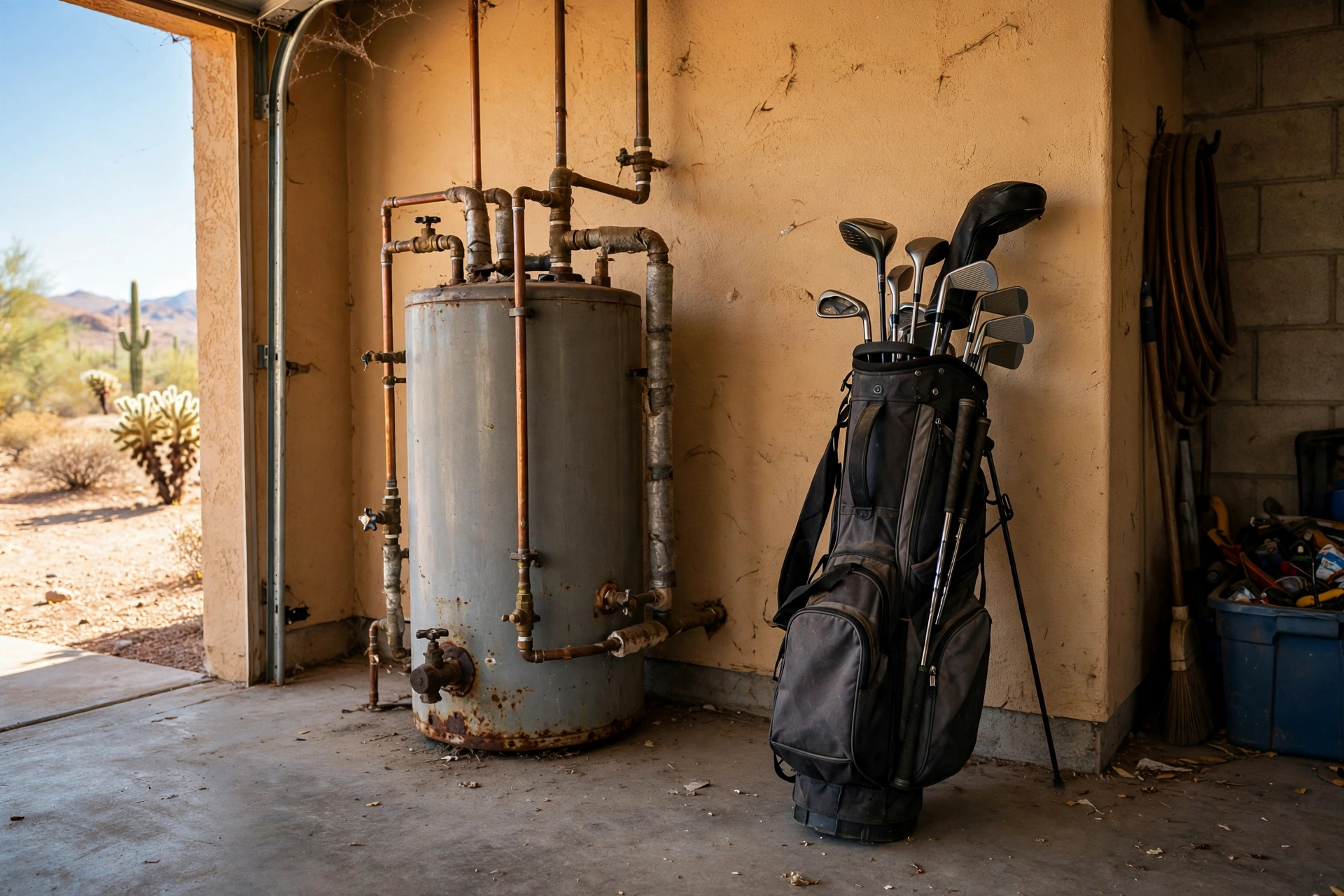
Garage installs shape daily performance in the West Valley. Peoria homes sit slab on grade with no basements, so the garage becomes the workhorse space for the heater, the softener, and storage. Summer garage heat past 110 degrees keeps incoming water warm and eases the heating load, yet it also bakes rubber parts, insulation, and controls over time. A Sun City West garage with a west facing door can run hotter than a shaded garage a few streets away, and that difference shows up in wear.
Clearance and airflow deserve a look during any visit. Boxes stacked against the tank, a workbench crowding the front, and a blocked drain path turn a simple flush into a struggle. Dust from desert winds settles on vents and controls, and a garage that doubles as a workshop collects lint and debris faster than a spare room would. Keeping the area around the tank clear, dry, and easy to reach helps a contractor work safely and helps a homeowner spot a drip early.
Request service and get a straight answer about your unit.
Phoenix Valley water runs hard, with a Valley wide range of 15 to 25 grains per gallon. Heat drives calcium and magnesium out of the water, and those minerals settle as sediment on the tank floor. Over years, sediment acts like a blanket between the burner or elements and the water, forcing longer heating cycles and stirring the popping and rumbling sounds many owners notice. Flushing on a steady schedule removes loose sediment before it hardens into a stubborn layer.
Sediment also hides other wear. A tank that rumbles may also carry a thinning anode rod, a tired relief valve, or rust starting at seams a homeowner cannot see. Tanks in Arizona generally last 6 to 10 years, and hard water plus long idle months can push an older unit toward the short end of that span. When age, noise, and rust tint line up together, water heater replacement deserves a frank discussion rather than another short term patch.
Do not wait for a small fault to flood the garage. Request service now.
Timing a replacement around travel avoids the worst outcome, which is a leak discovered by a neighbor weeks after it starts. Many snowbirds schedule heater work in the fall, soon after returning, when the house is occupied and any follow up visit is easy to arrange. Others handle it in spring, before leaving, so the home sits with a fresh tank and a known shutoff plan. Either window works better than leaving an aging tank untended through a long absence. The warning signs in older Sun City water heaters help owners judge whether fall or spring makes more sense.
A replacement visit is also a chance to review the full setup. Shutoff valves, drain routing, expansion handling, and thermostat settings all deserve fresh eyes when a new tank goes in. Leaving with clear notes on vacation settings, drain locations, and shutoff positions gives a traveling homeowner a calmer summer away.
Request service and talk through sizing, fuel type, and placement.
Read the guide, then describe your water heater problem and we will help arrange the next step.
Tanks in Arizona generally last 6 to 10 years, and Sun City units often sit near the shorter end when hard water, garage heat, and long idle months combine. Age alone does not settle the question. Noise, rust tint, slow recovery, and past repairs together paint a clearer picture than the install date by itself.
Not always. A smaller household with steady routines may do well with a mid size tank, but guest visits, laundry, and a soaking tub can create peak demand that rivals a larger household. Sizing should reflect the busiest week, including visitors, rather than the quietest weekday alone.
Check garage clearance, drain routing, shutoff valve positions, and whether the current tank size still fits guest patterns and any added bathroom or laundry load. Note the thermostat setting, any rust or dampness, and how the unit behaves after back to back showers. Those details help a contractor recommend a fit that suits the floor plan.
Yes, hard water leaves sediment that insulates the tank floor, lengthens heating cycles, and wears on the anode rod and heating parts. Regular flushing and rod checks slow that wear, but they do not erase it. Households with a softener still need rod attention, since softened water changes how rods wear.
Answers shaped for ranch floor plans, hard Valley water, and households that travel part of the year.
Request ServiceSnowbirds leaving Peoria for the summer face a simple choice with real consequences: leave the water heater ru...
Learn more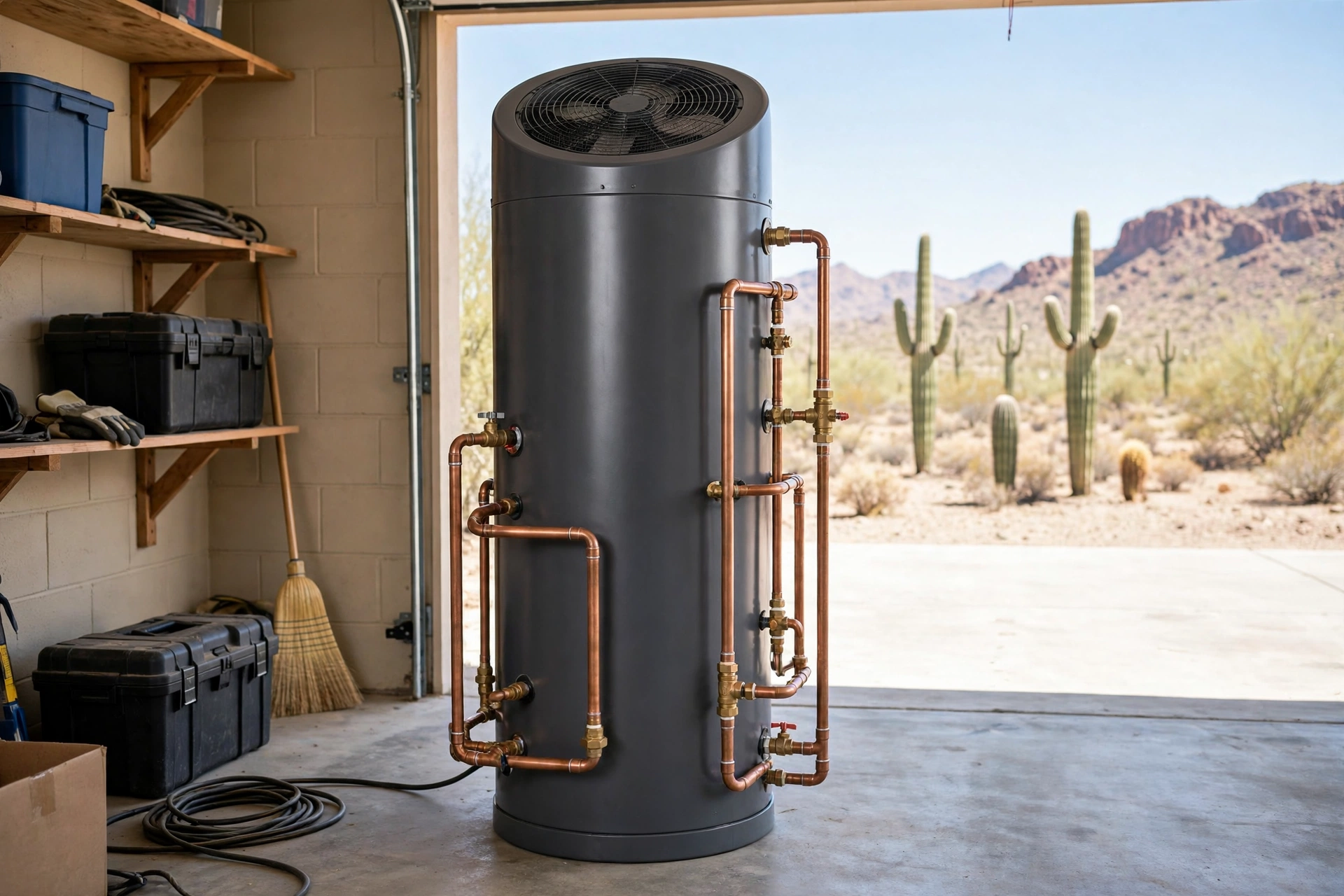
A heat pump water heater pulls warmth from the air around it and moves that warmth into the tank, rather than ...
Learn more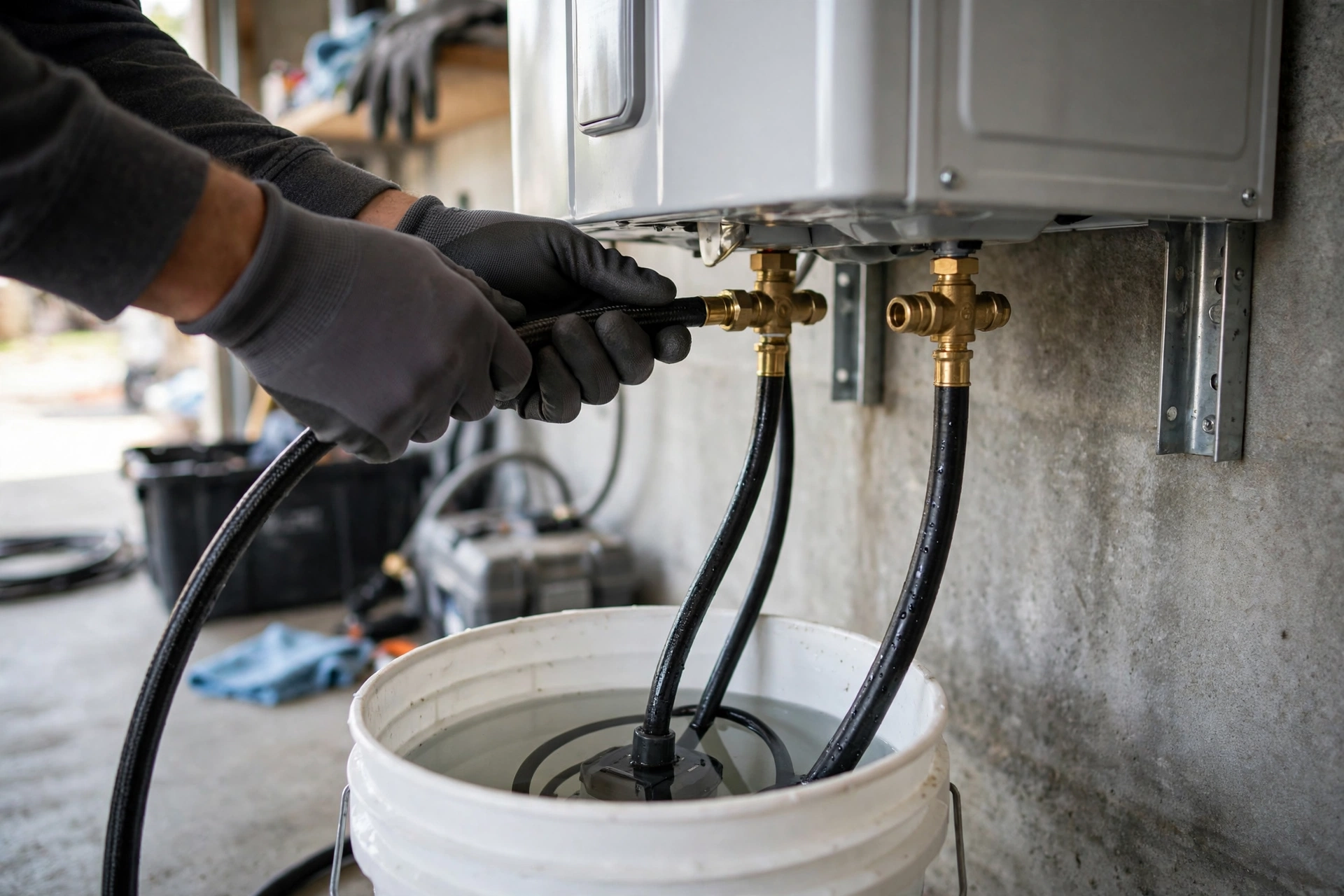
A tankless water heater heats water as it flows through a heat exchanger, and hard Peoria water leaves calcium...
Learn more